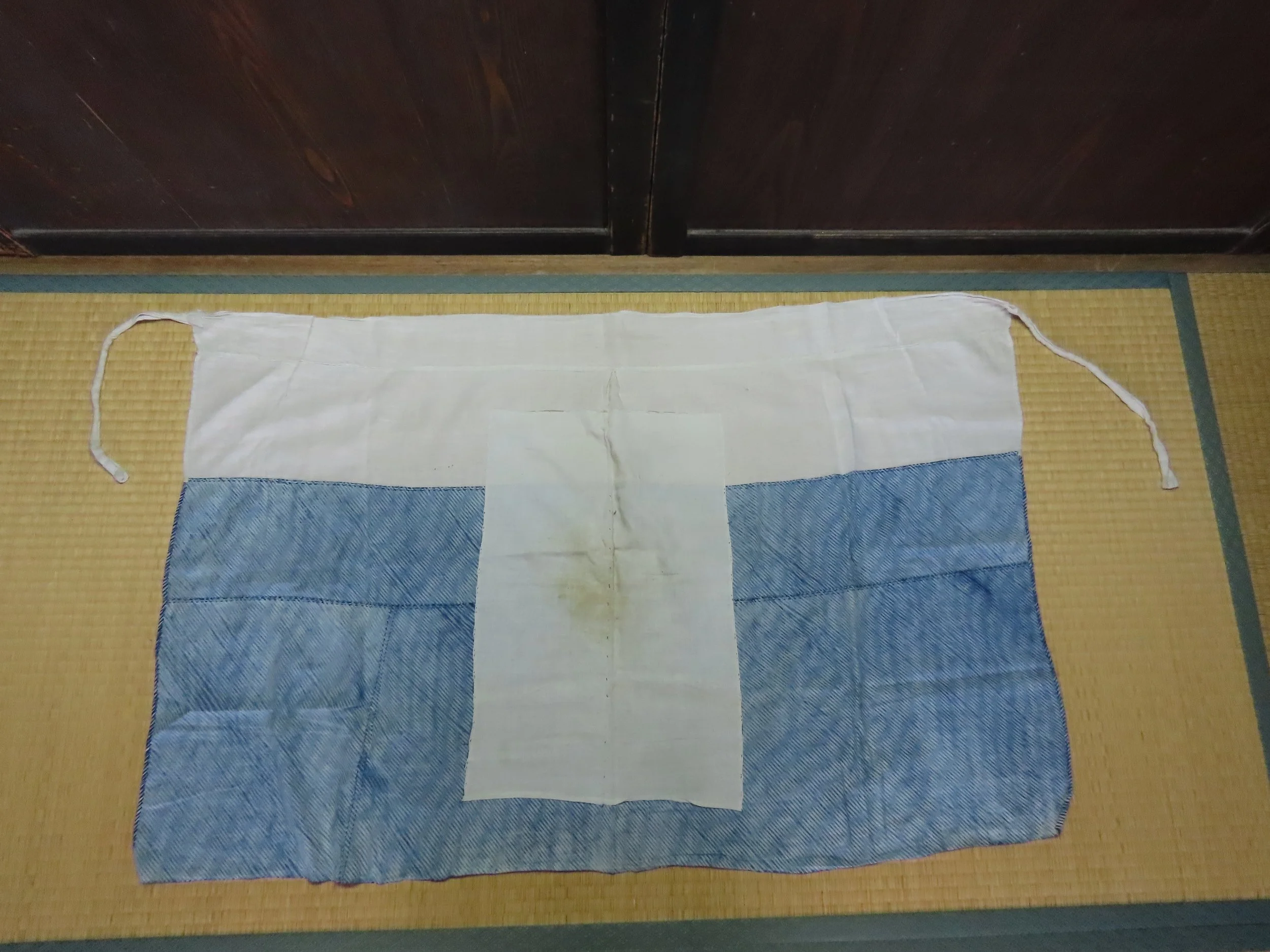
Double Arashi Shibori Indigo dyed boro koshimaki
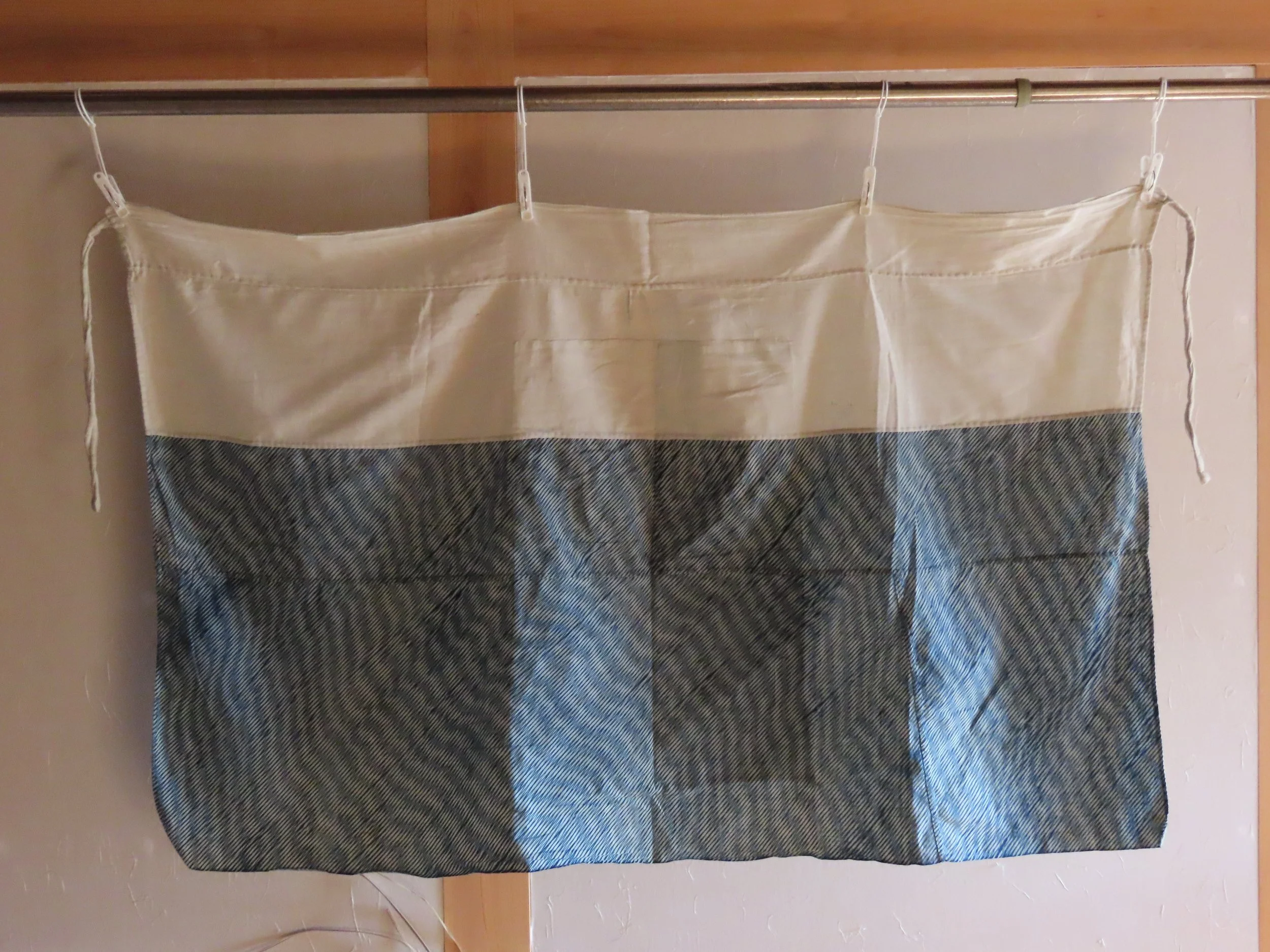
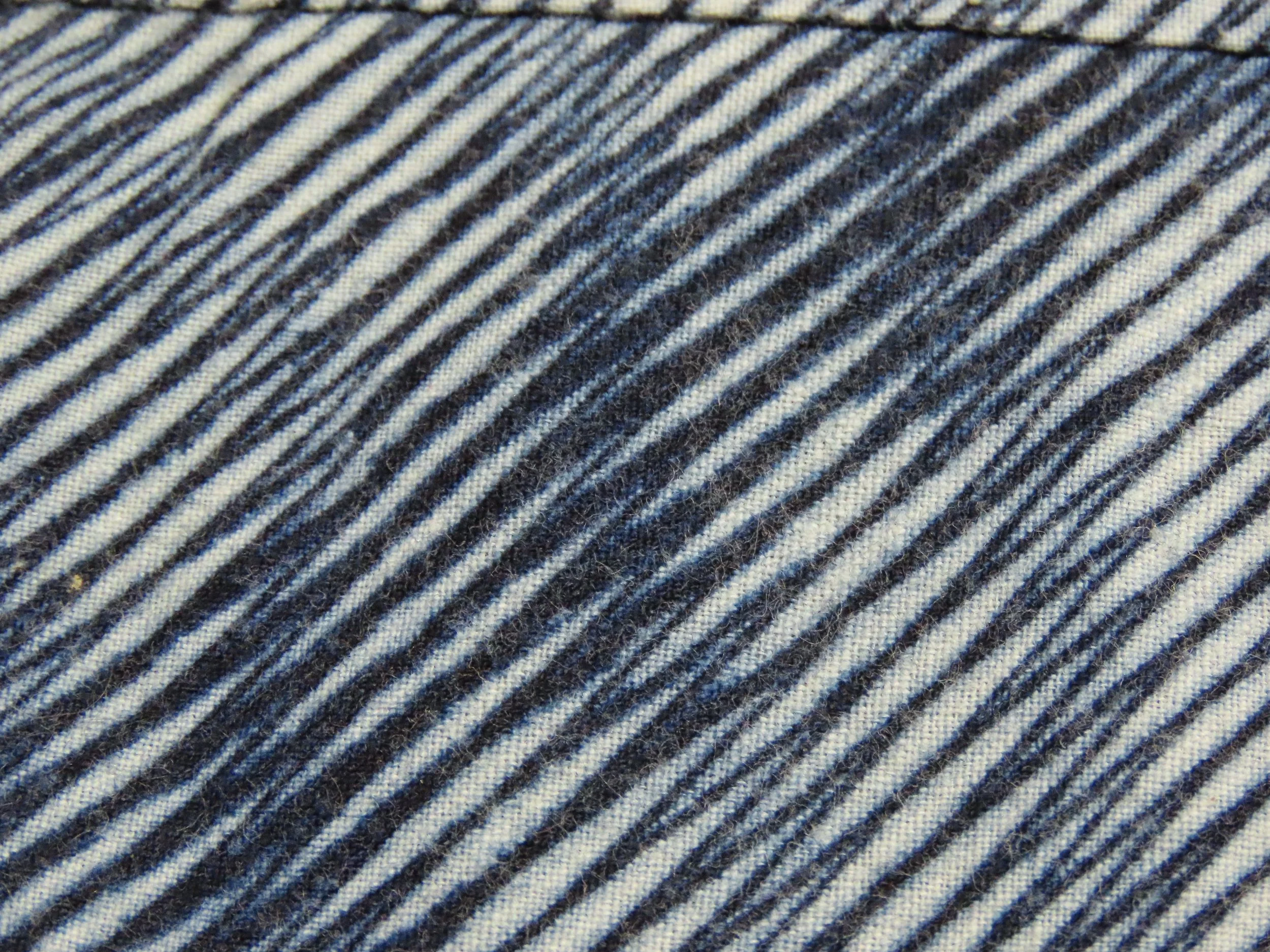
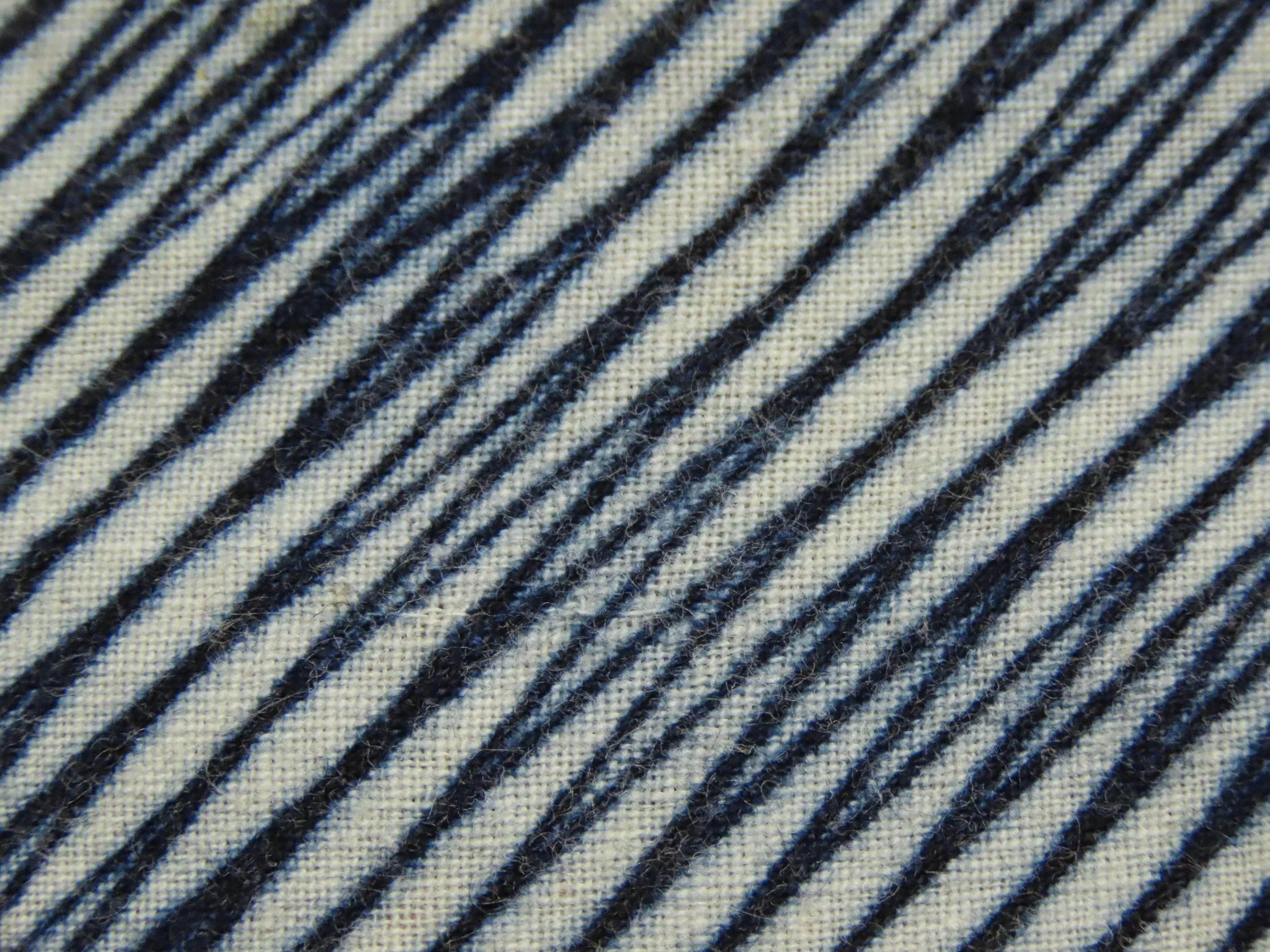
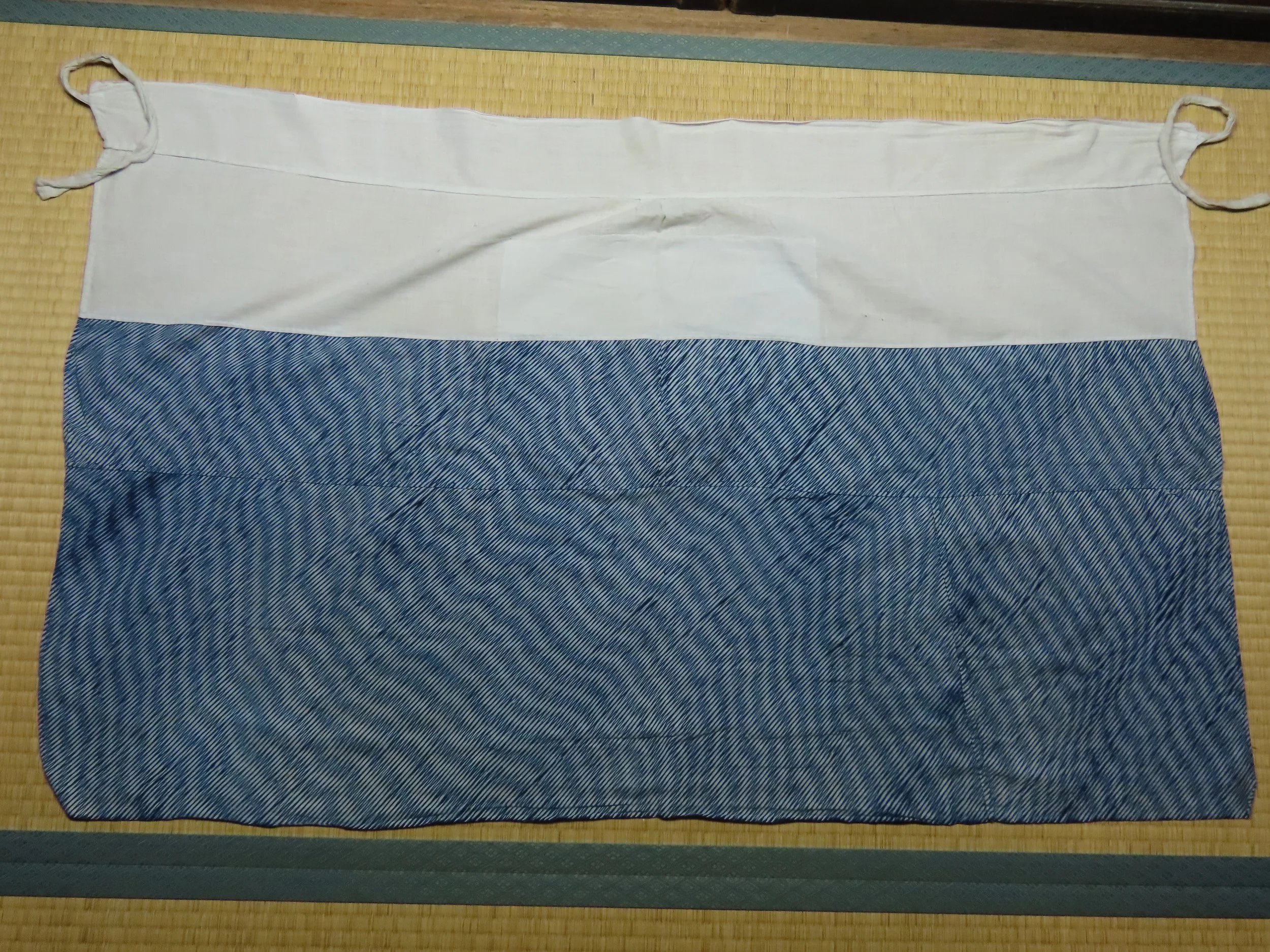
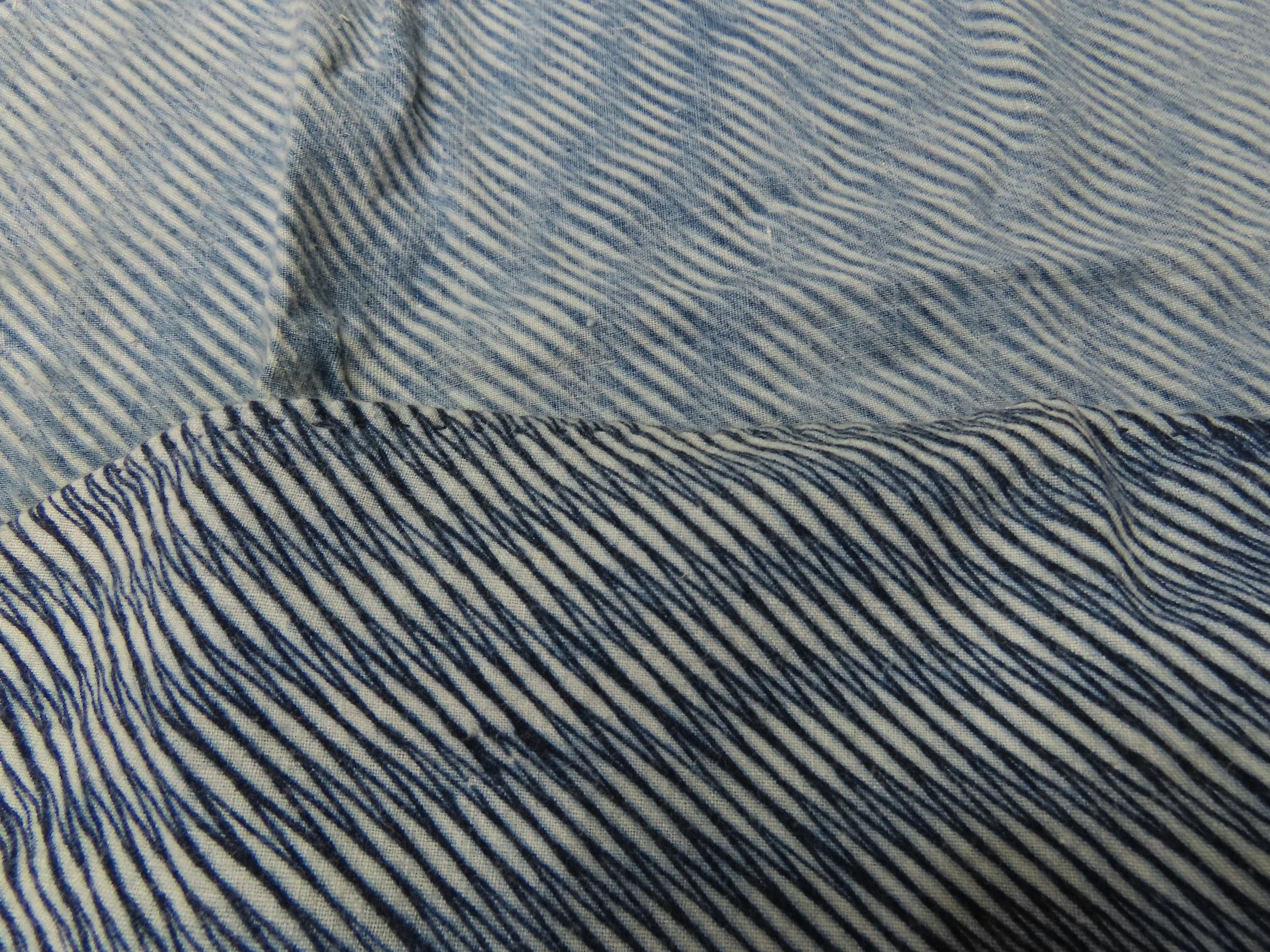
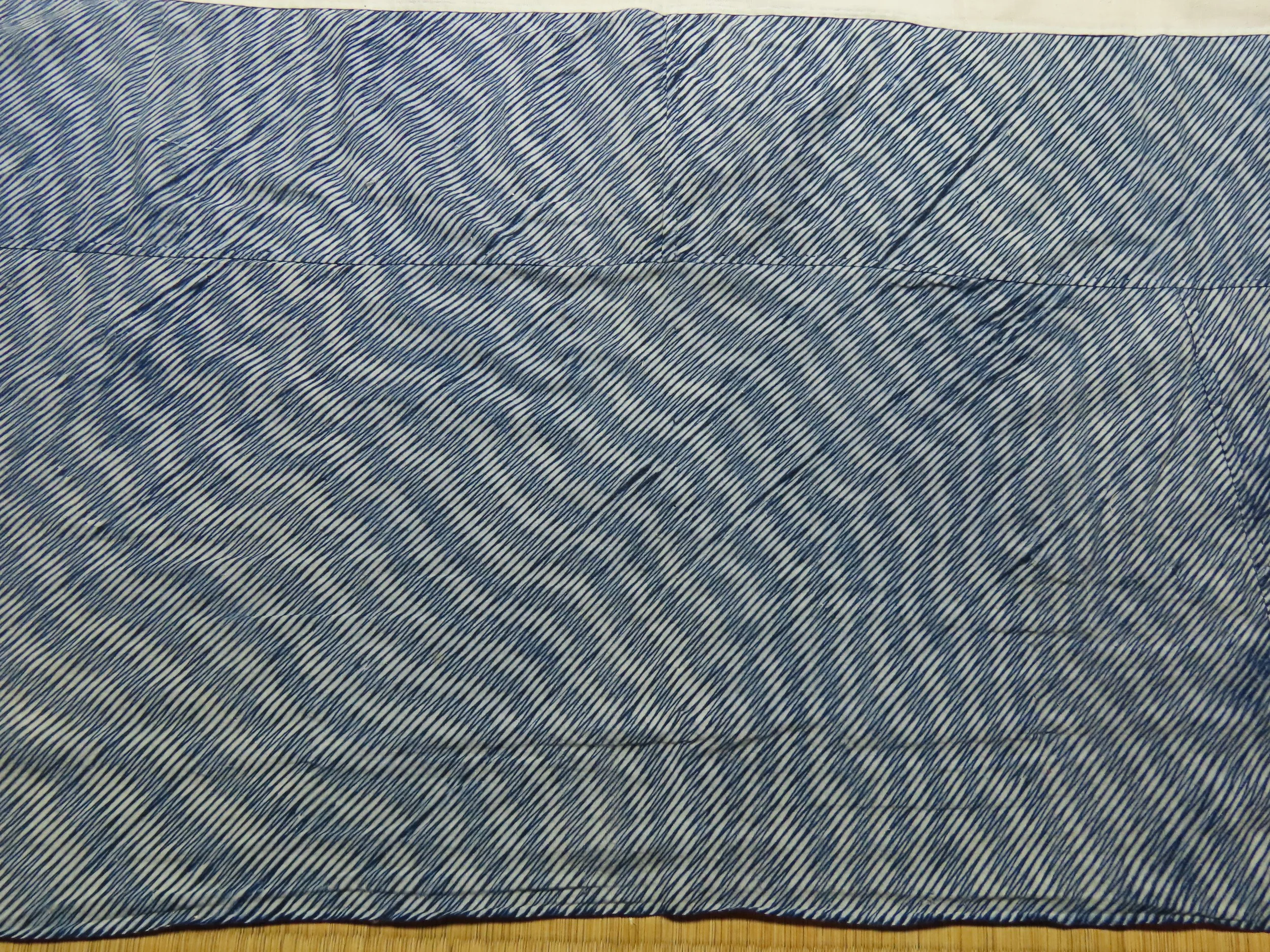
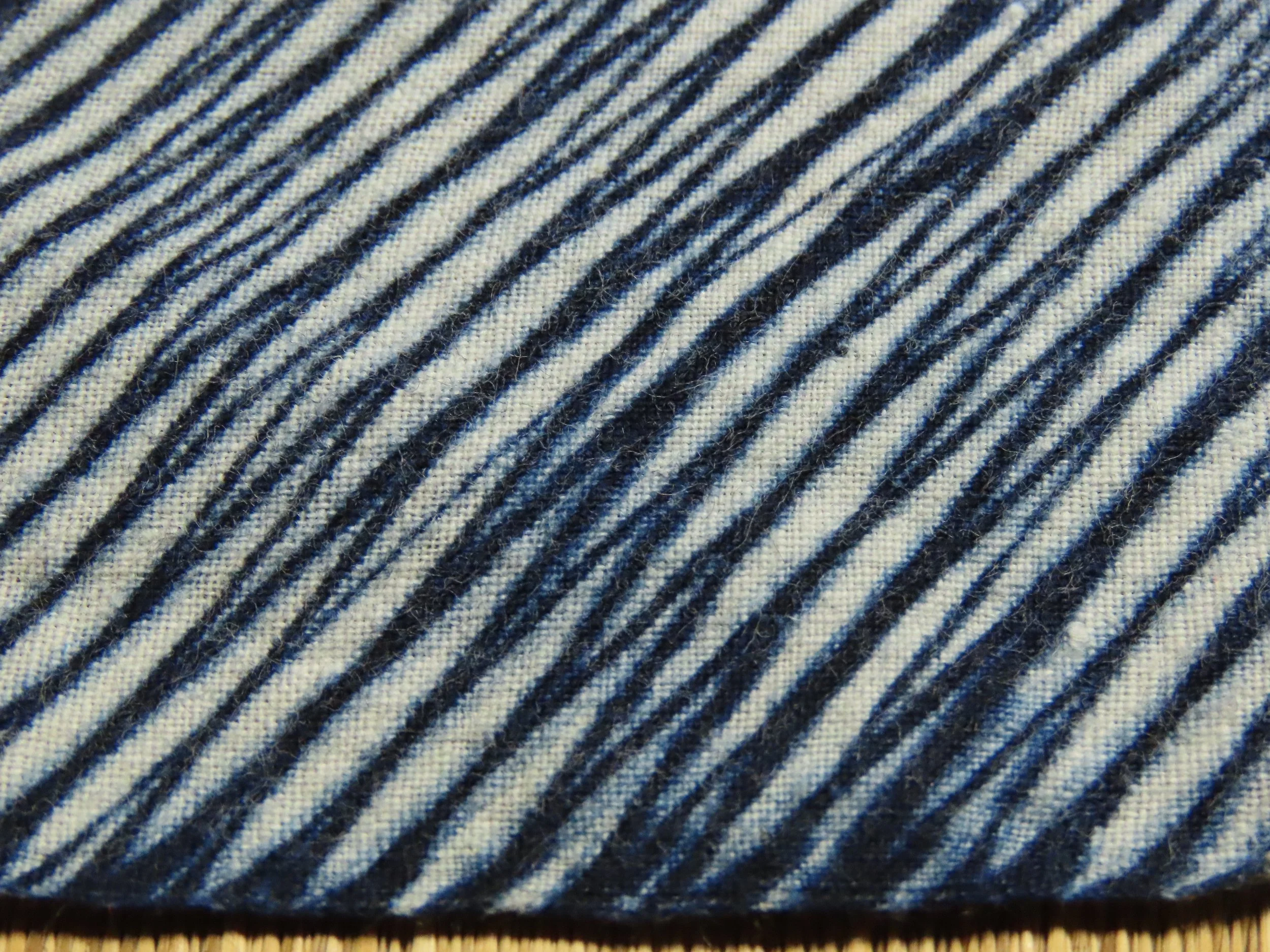
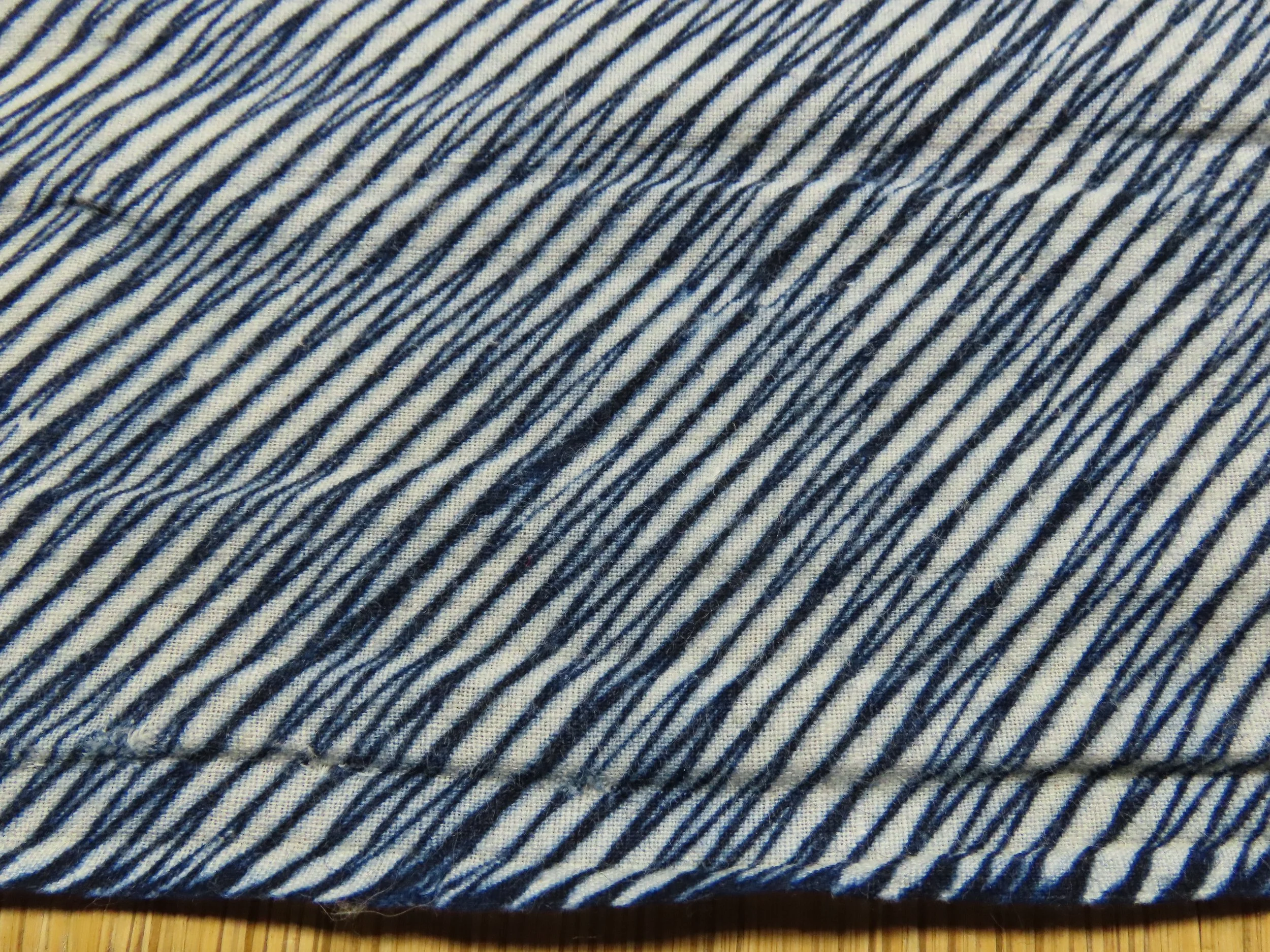
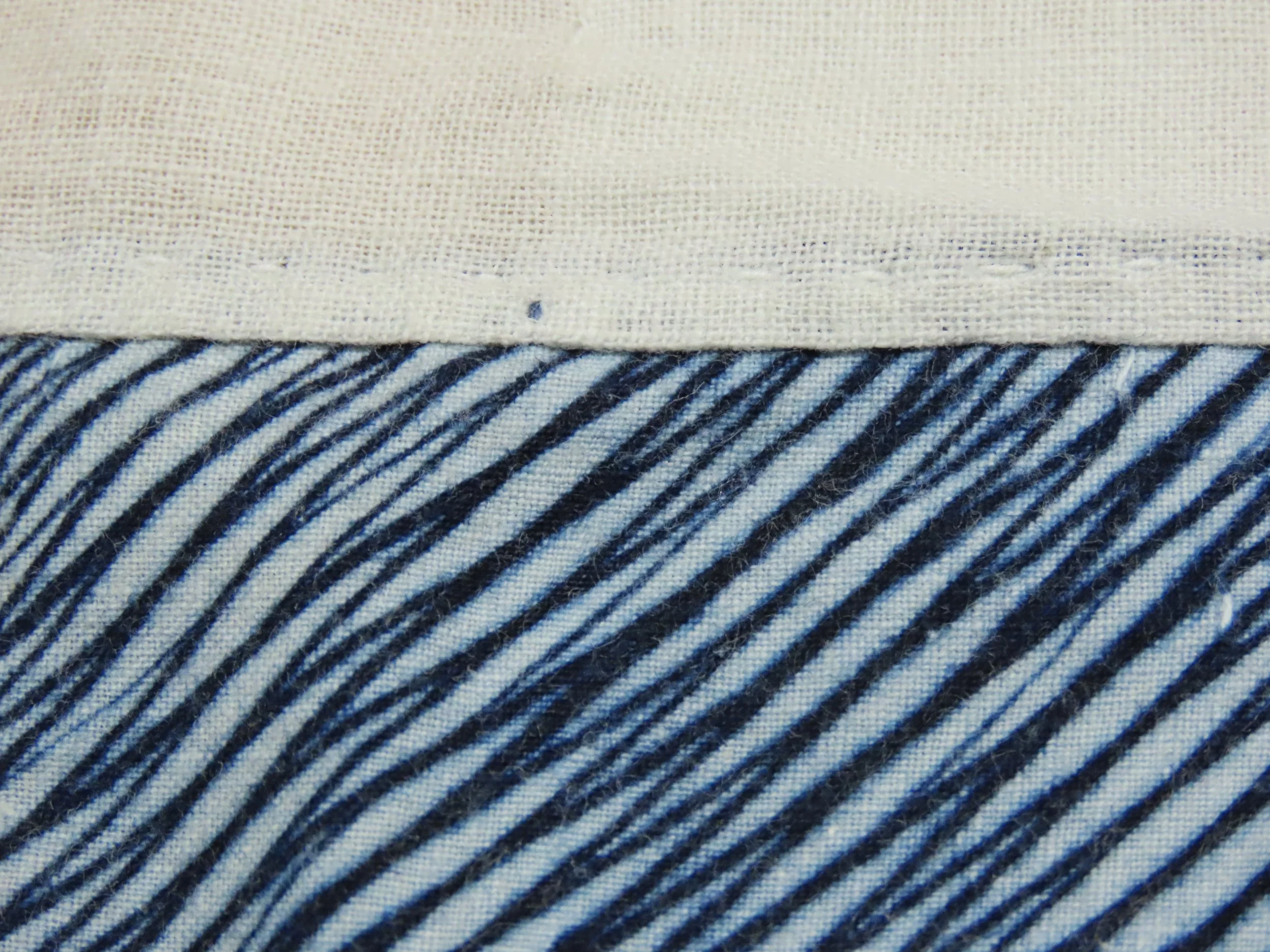
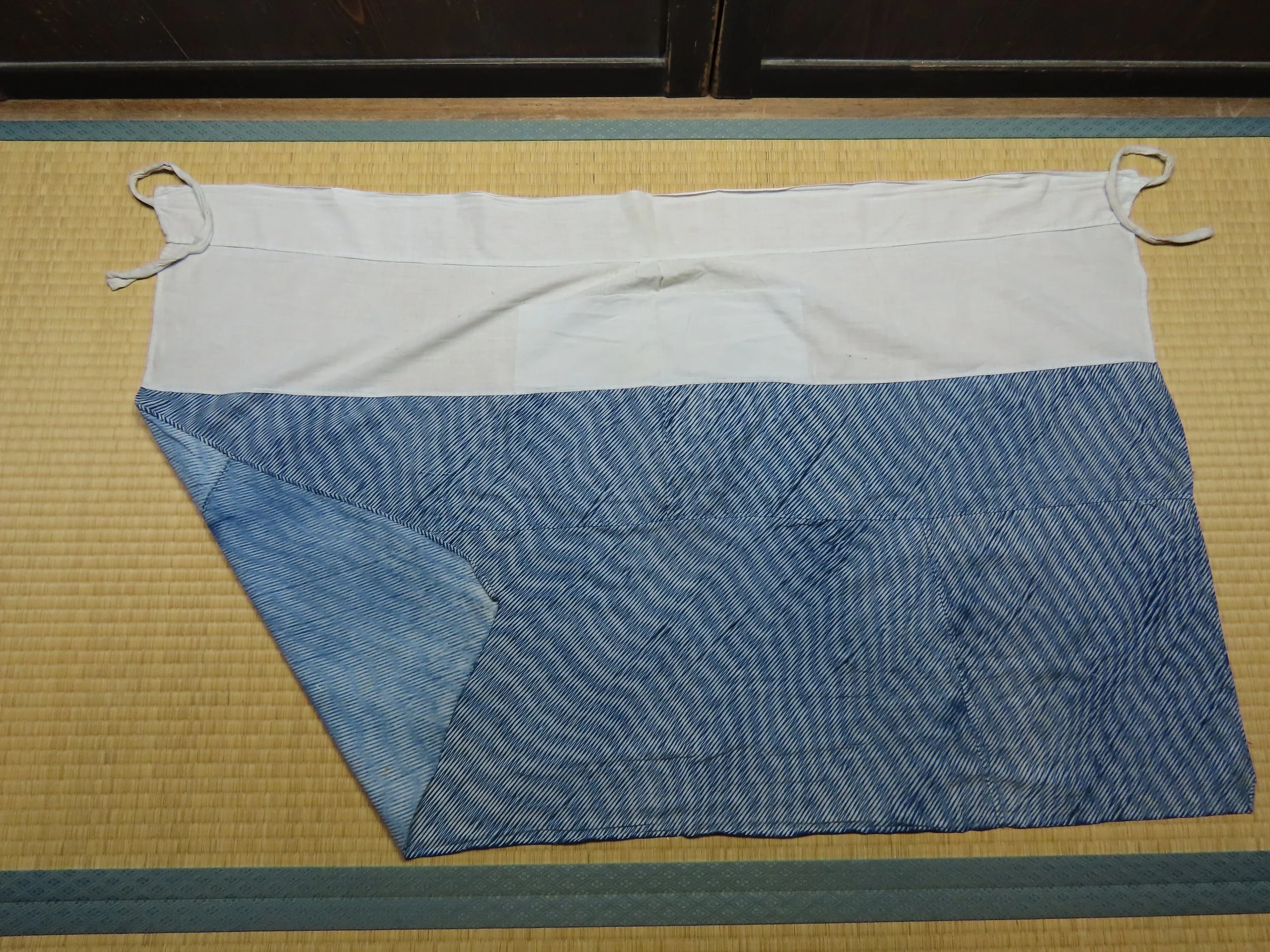
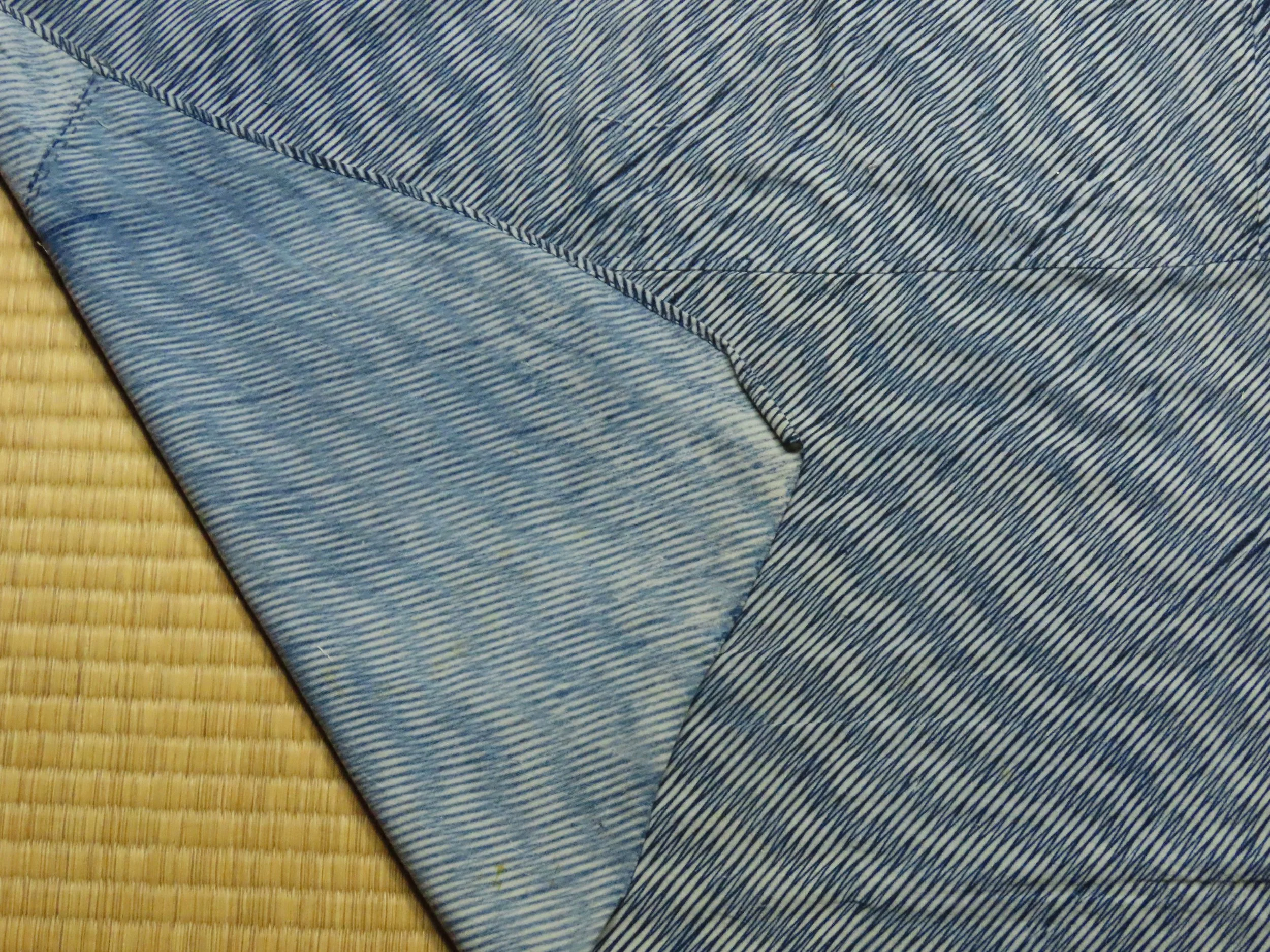
This is an antique koshimaki, most likely from the Meiji era. A koshimaki is a woman's undergarment, basically. The fabric is a light, handwoven cotton sarashi. Viewed under a jeweler's loop, the fibers are uneven, a sign of handspun fibers, and the selvedges are also somewhat uneven. Either hand woven or early industrial loom. The dye is a rich indigo blue. The backside is lighter, which follows with the technique. See the photos.
Boro style, great as decor, part of your textile collection, or even for wearing!!
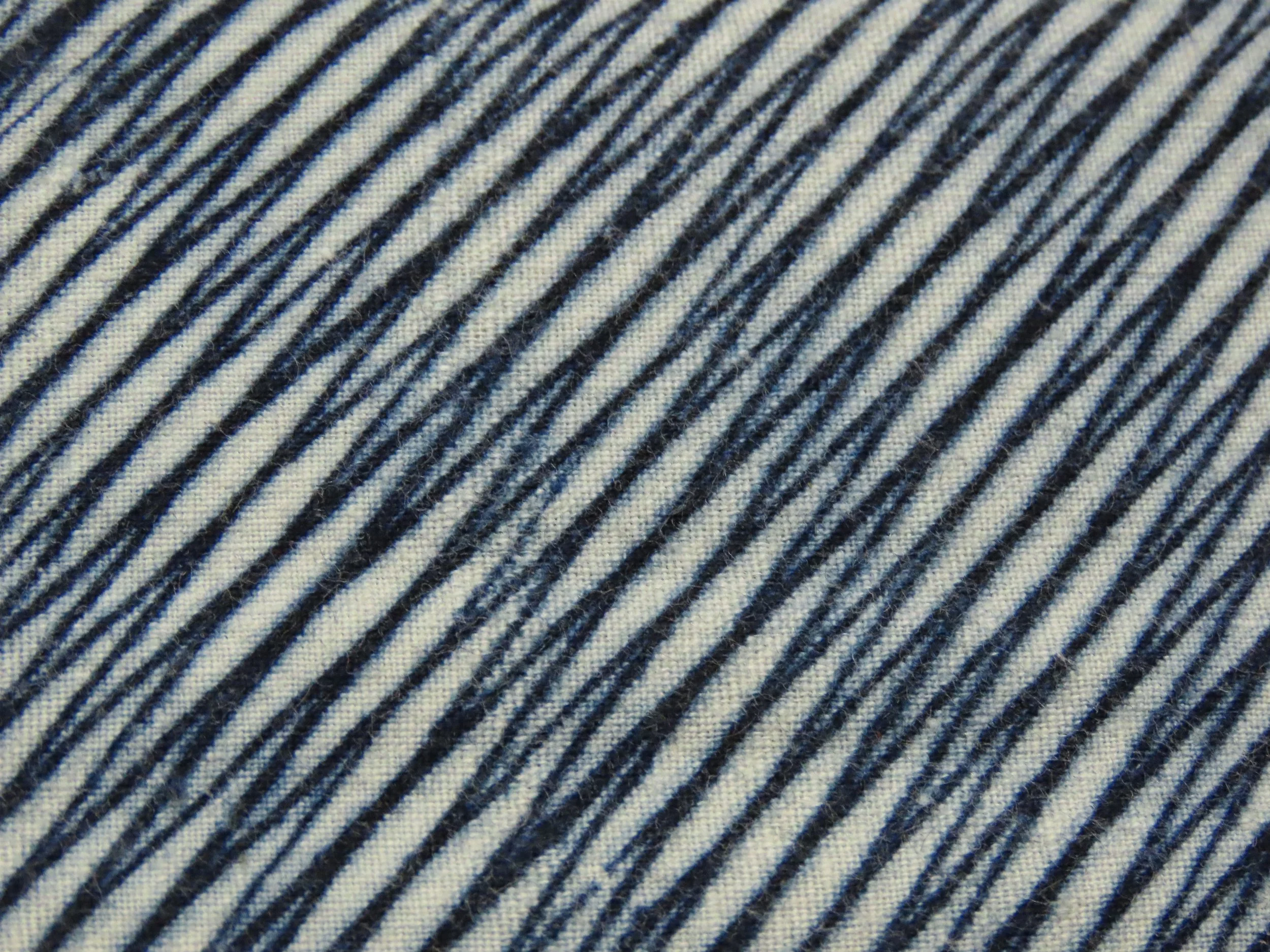
Arashi shibori, or storm shibori, is named for the horizontal lines, which are thought to resemble a driving rain. The process involves wrapping fabric around a smooth pole and then winding that tightly with string, and scrunching the bound fabric down the pole. It is then dyed, often in indigo.
For double arashi, the process is done twice, at a slightly different angle. I love the oscillation effect of the blending patterns. It plays games with your eyes if you look too closely.
In true boro style, the shibori part is made up of 4 different panels sewn together, with care to make the pattern run in the same direction.
The fabric is in surprisingly great condition. Finding these in such good condition is rare. It has been washed, and can be again.
118 cms x 74 cms, 584 grams
Share this listing and my shop all over the place, Instagram, Facebook, Pinterest, the local corkboard, tell the cat.
Meow.
Double Arashi Shibori Indigo dyed boro koshimaki
This is an antique koshimaki, most likely from the Meiji era. A koshimaki is a woman's undergarment, basically. The fabric is a light, handwoven cotton sarashi. Viewed under a jeweler's loop, the fibers are uneven, a sign of handspun fibers, and the selvedges are also somewhat uneven. Either hand woven or early industrial loom. The dye is a rich indigo blue. The backside is lighter, which follows with the technique. See the photos.
Boro style, great as decor, part of your textile collection, or even for wearing!!
Arashi shibori, or storm shibori, is named for the horizontal lines, which are thought to resemble a driving rain. The process involves wrapping fabric around a smooth pole and then winding that tightly with string, and scrunching the bound fabric down the pole. It is then dyed, often in indigo.
For double arashi, the process is done twice, at a slightly different angle. I love the oscillation effect of the blending patterns. It plays games with your eyes if you look too closely.
In true boro style, the shibori part is made up of 4 different panels sewn together, with care to make the pattern run in the same direction.
The fabric is in surprisingly great condition. Finding these in such good condition is rare. It has been washed, and can be again.
118 cms x 74 cms, 584 grams
Share this listing and my shop all over the place, Instagram, Facebook, Pinterest, the local corkboard, tell the cat.
Meow.