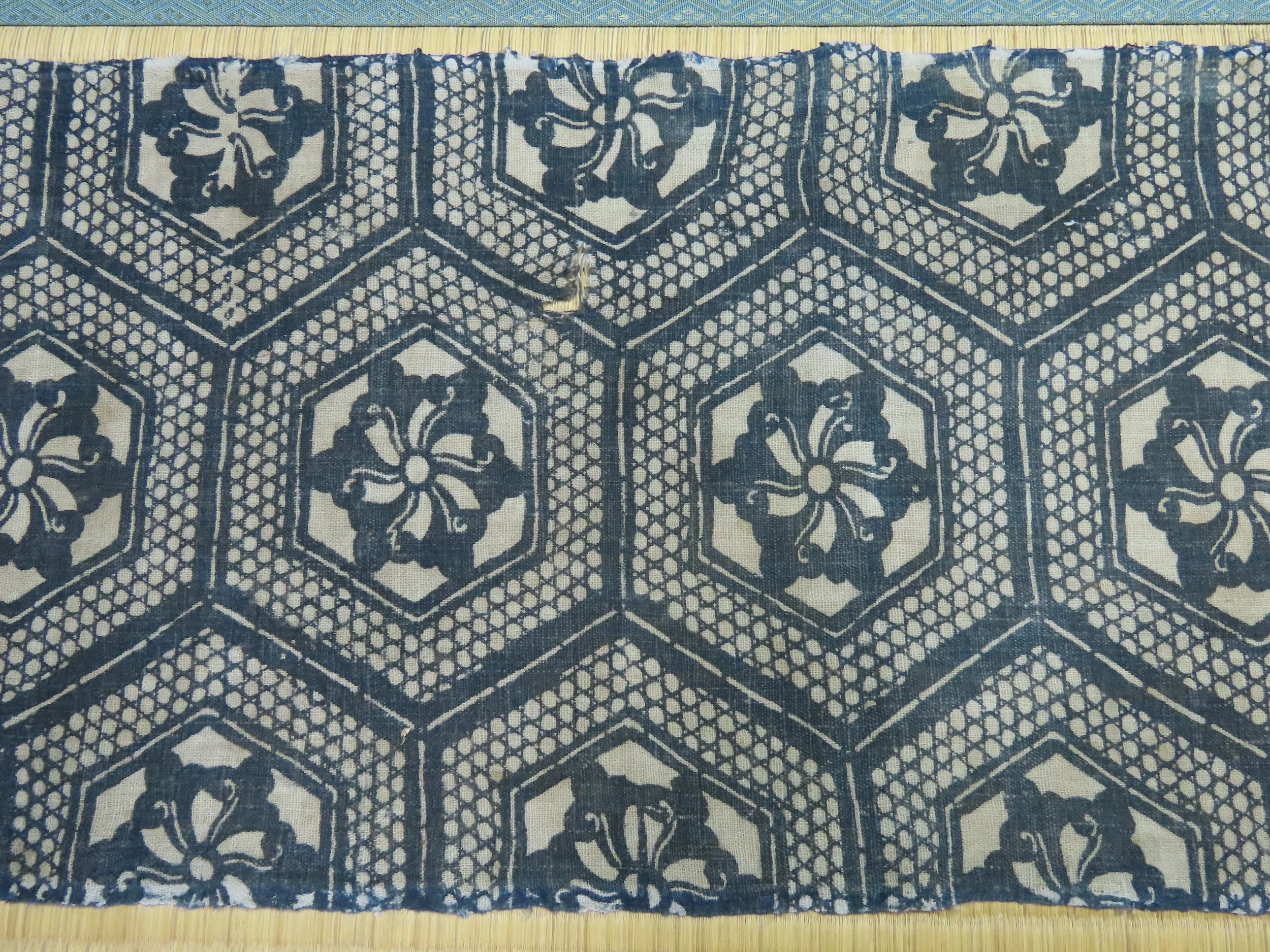
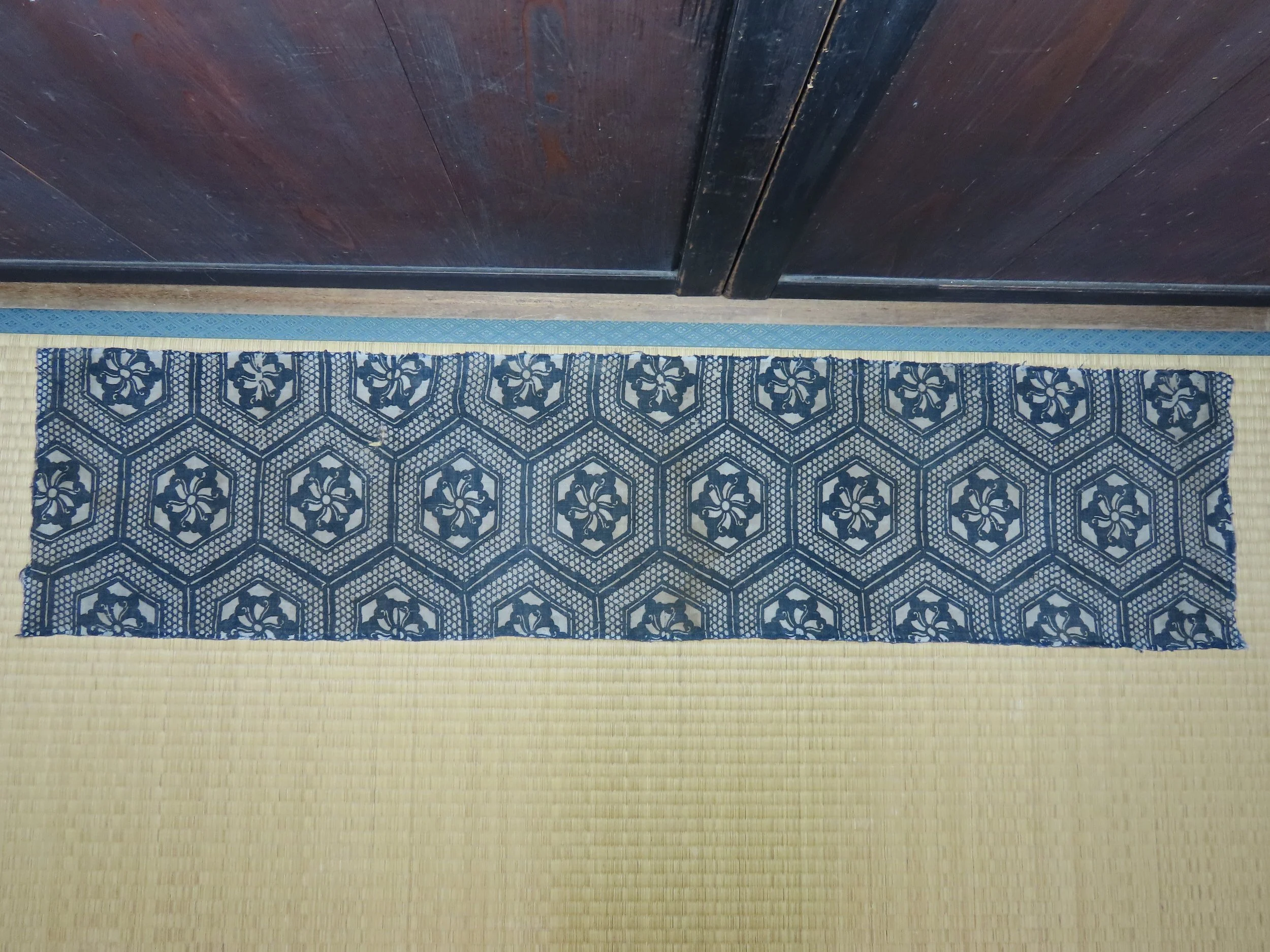
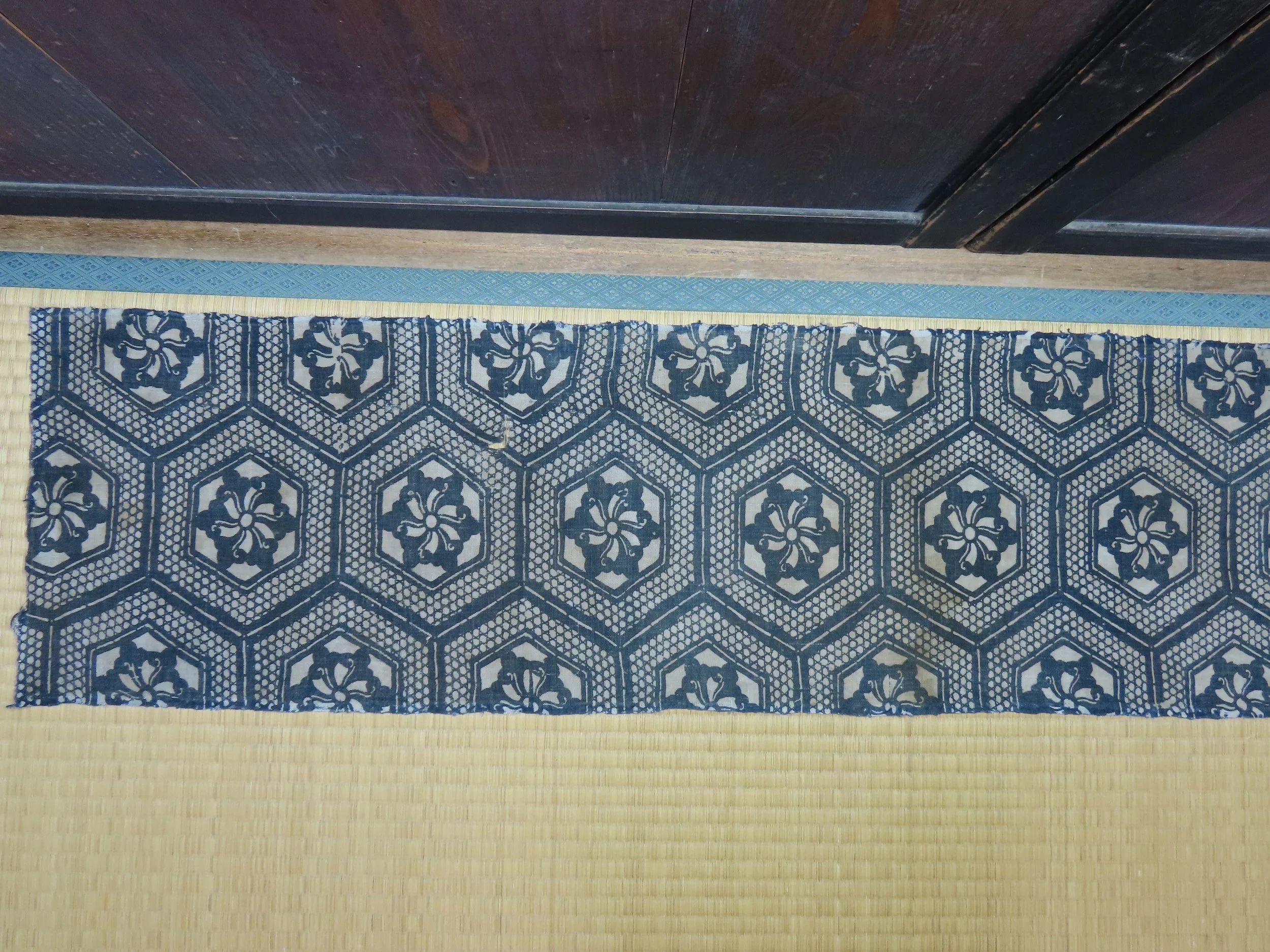
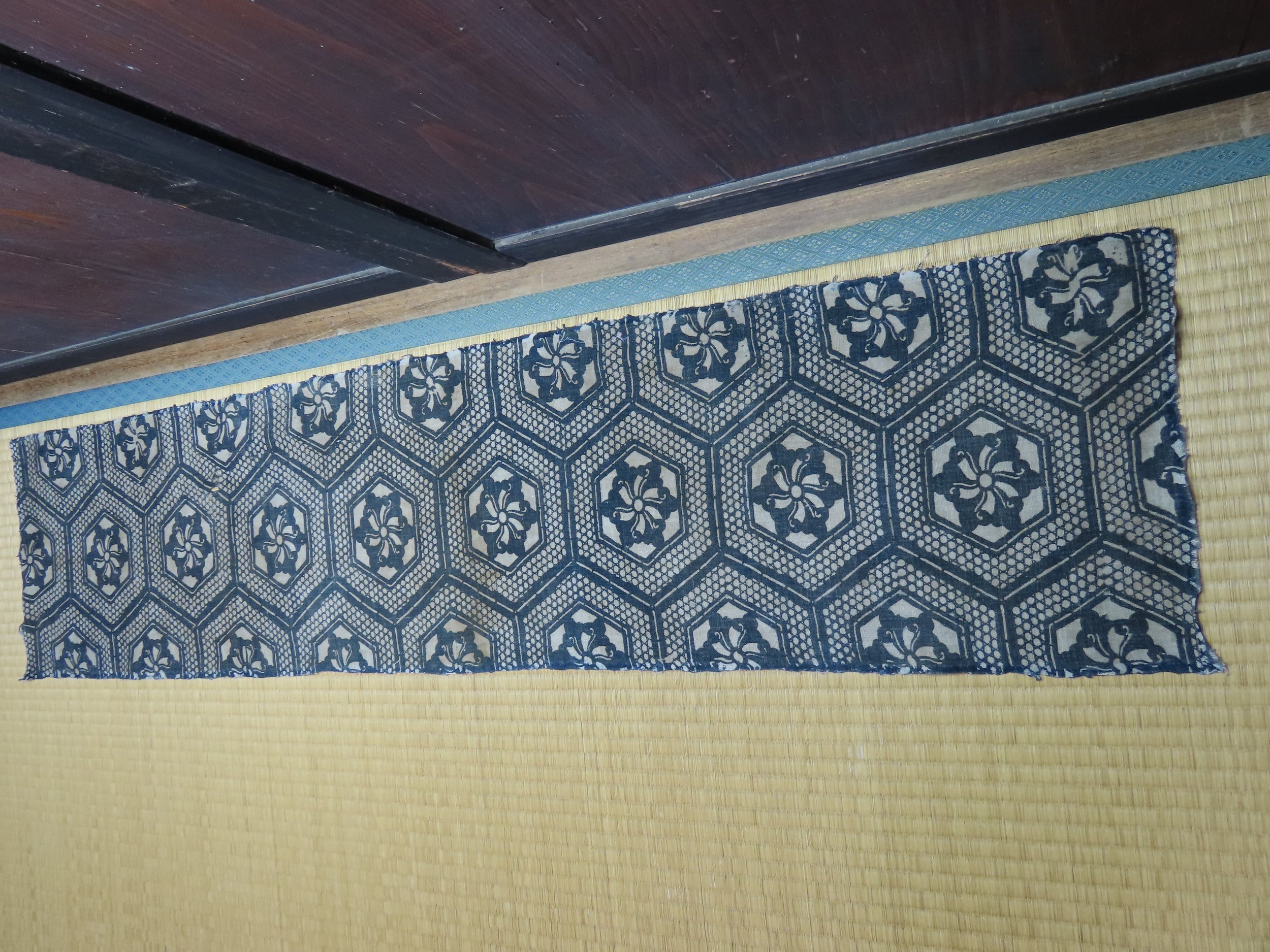
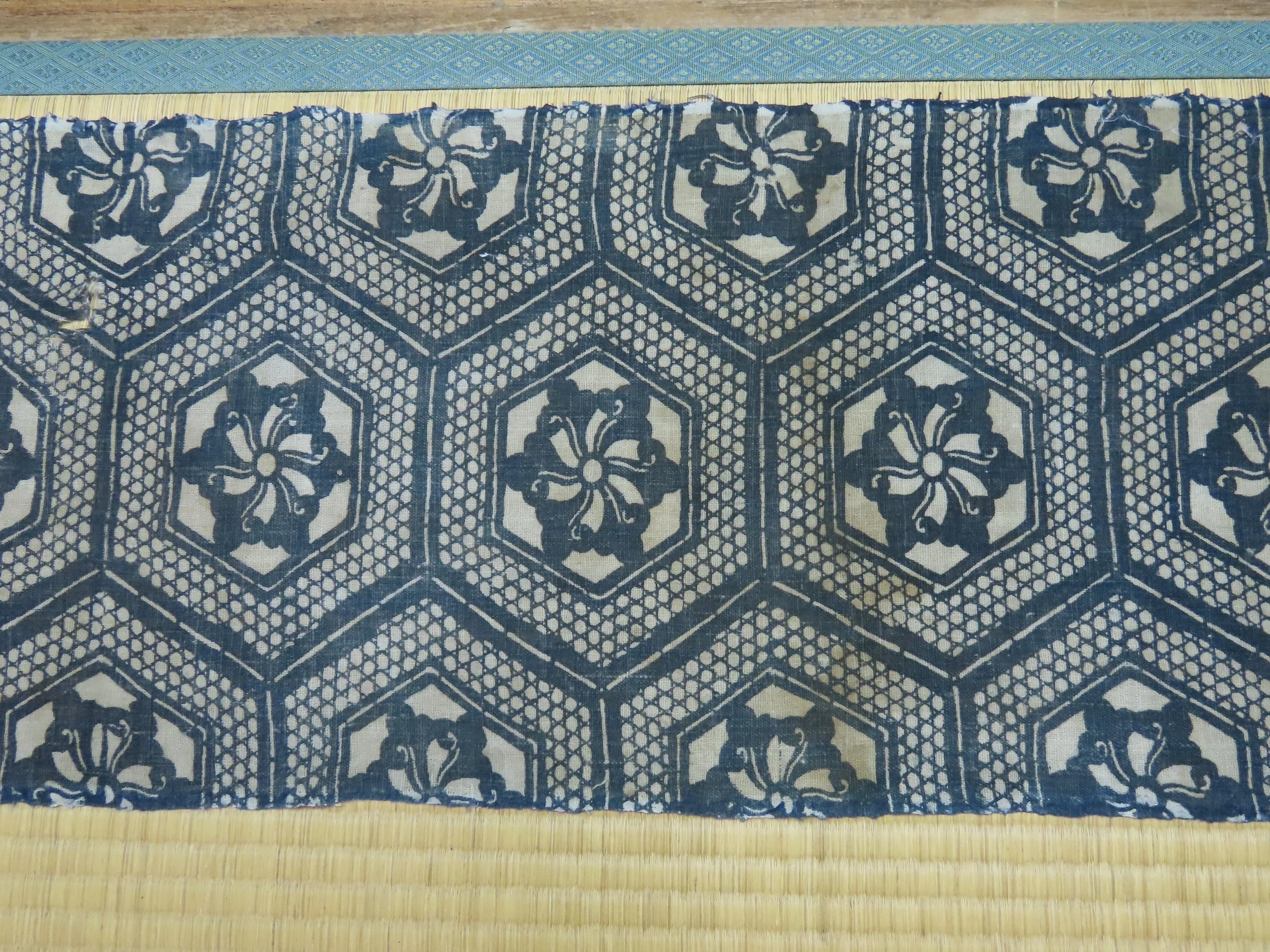

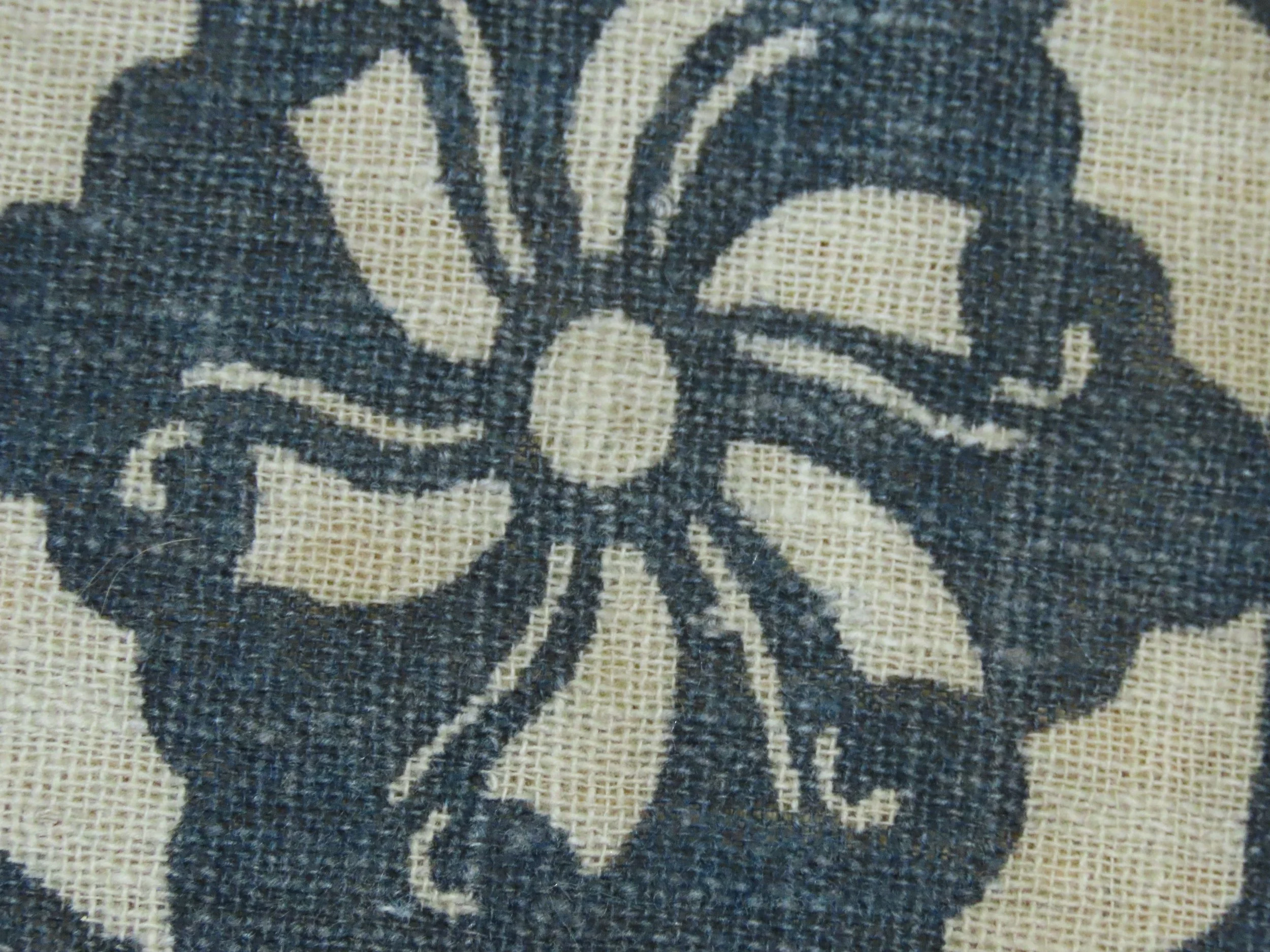
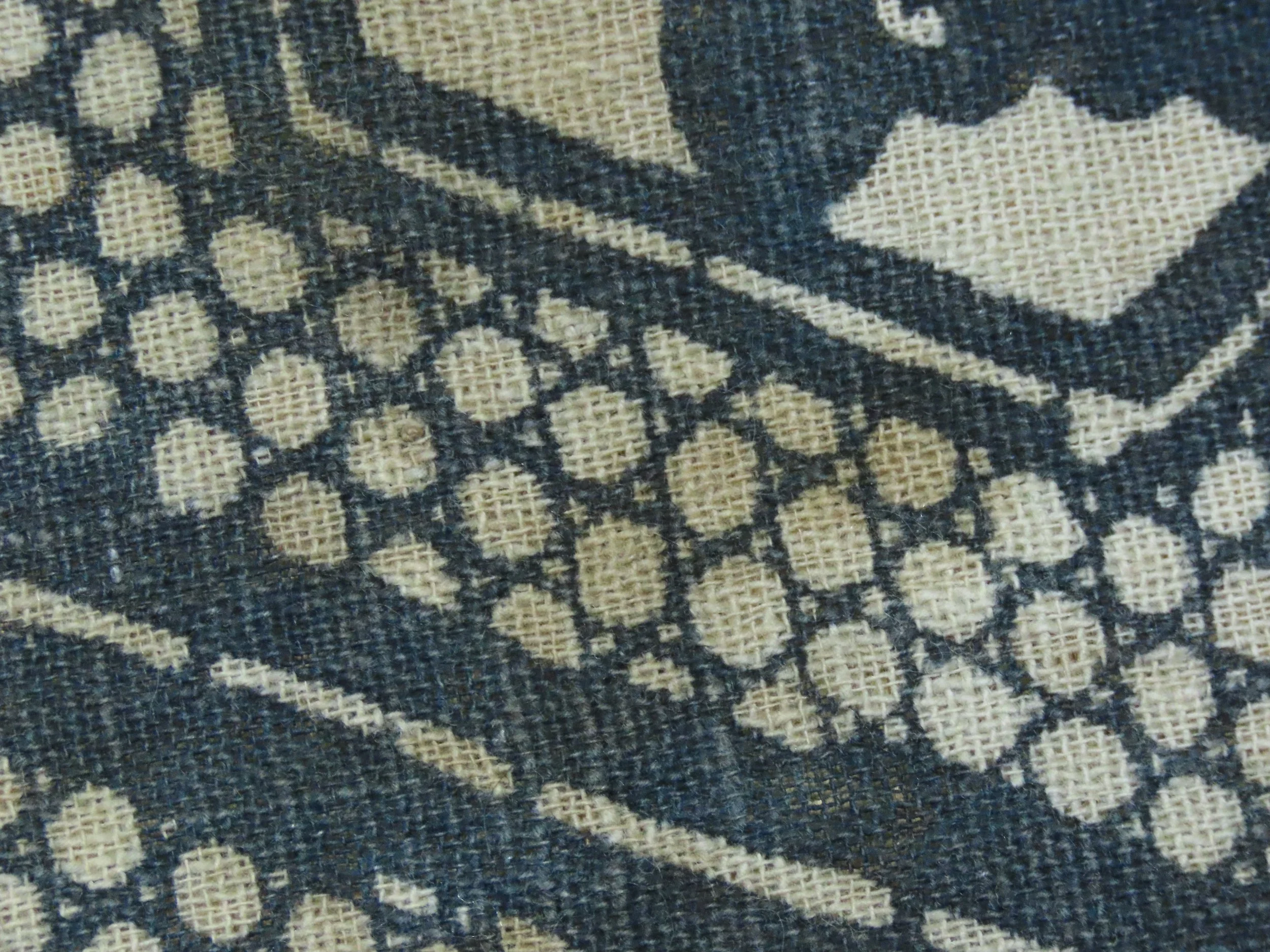
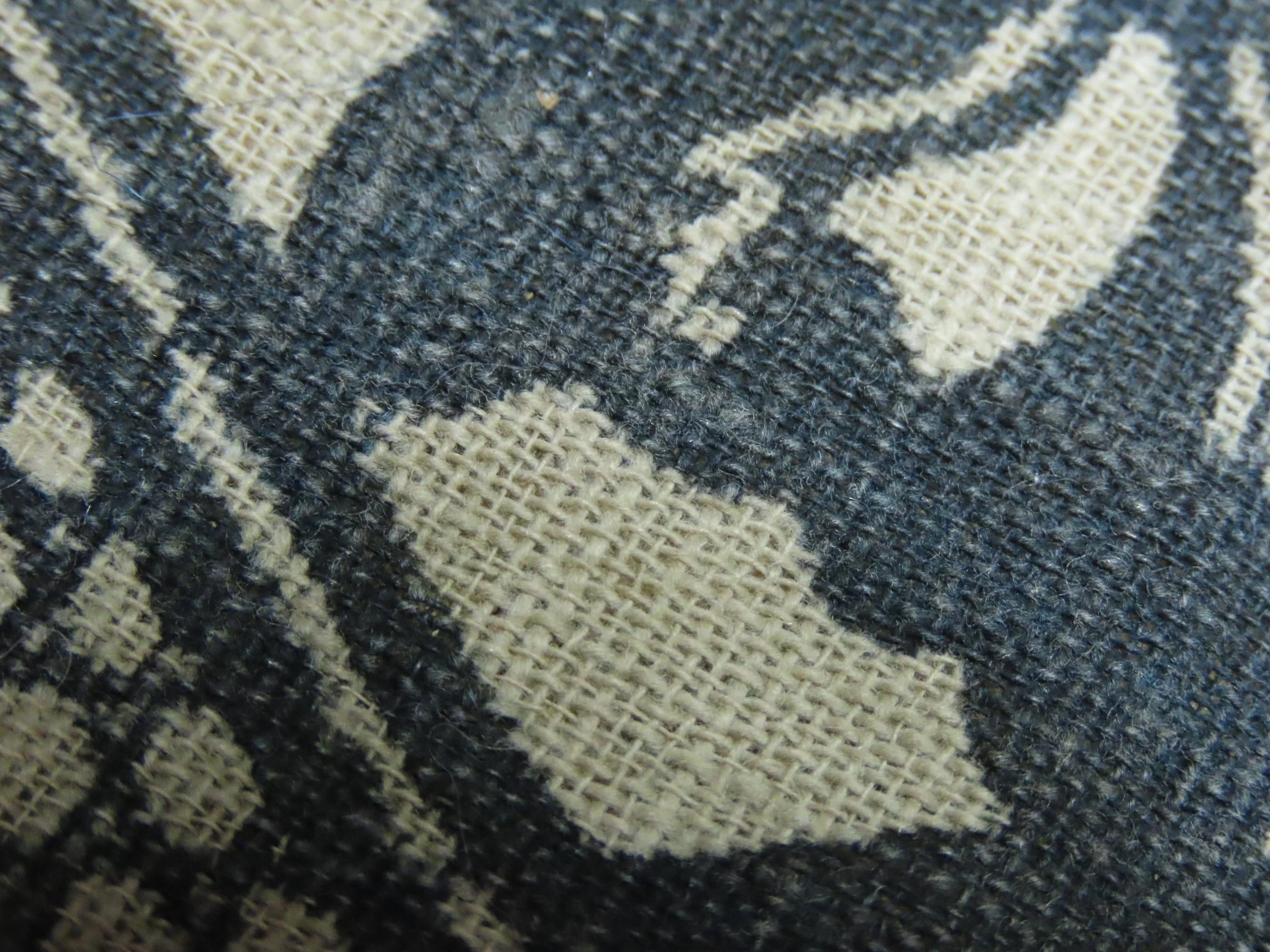
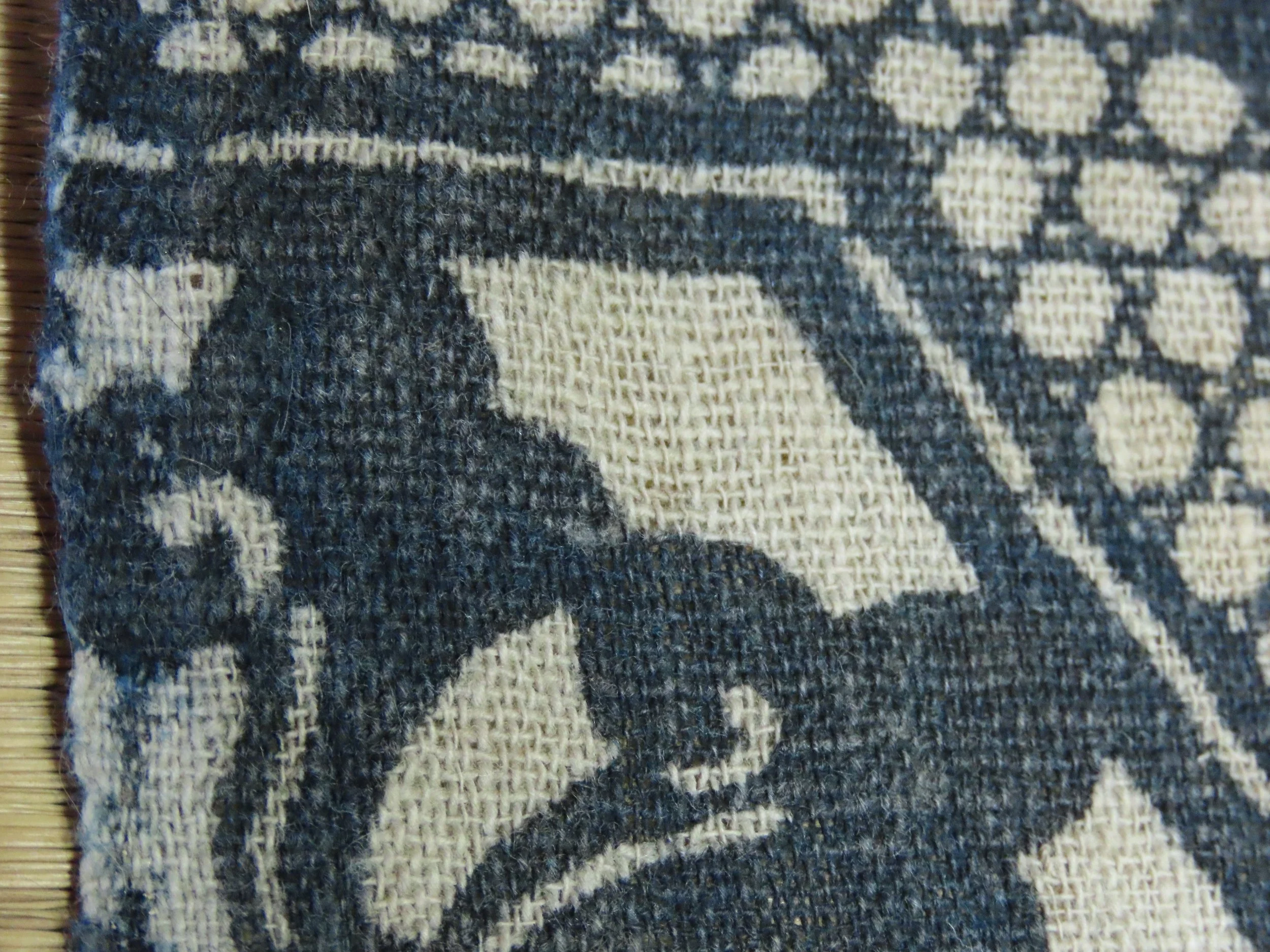
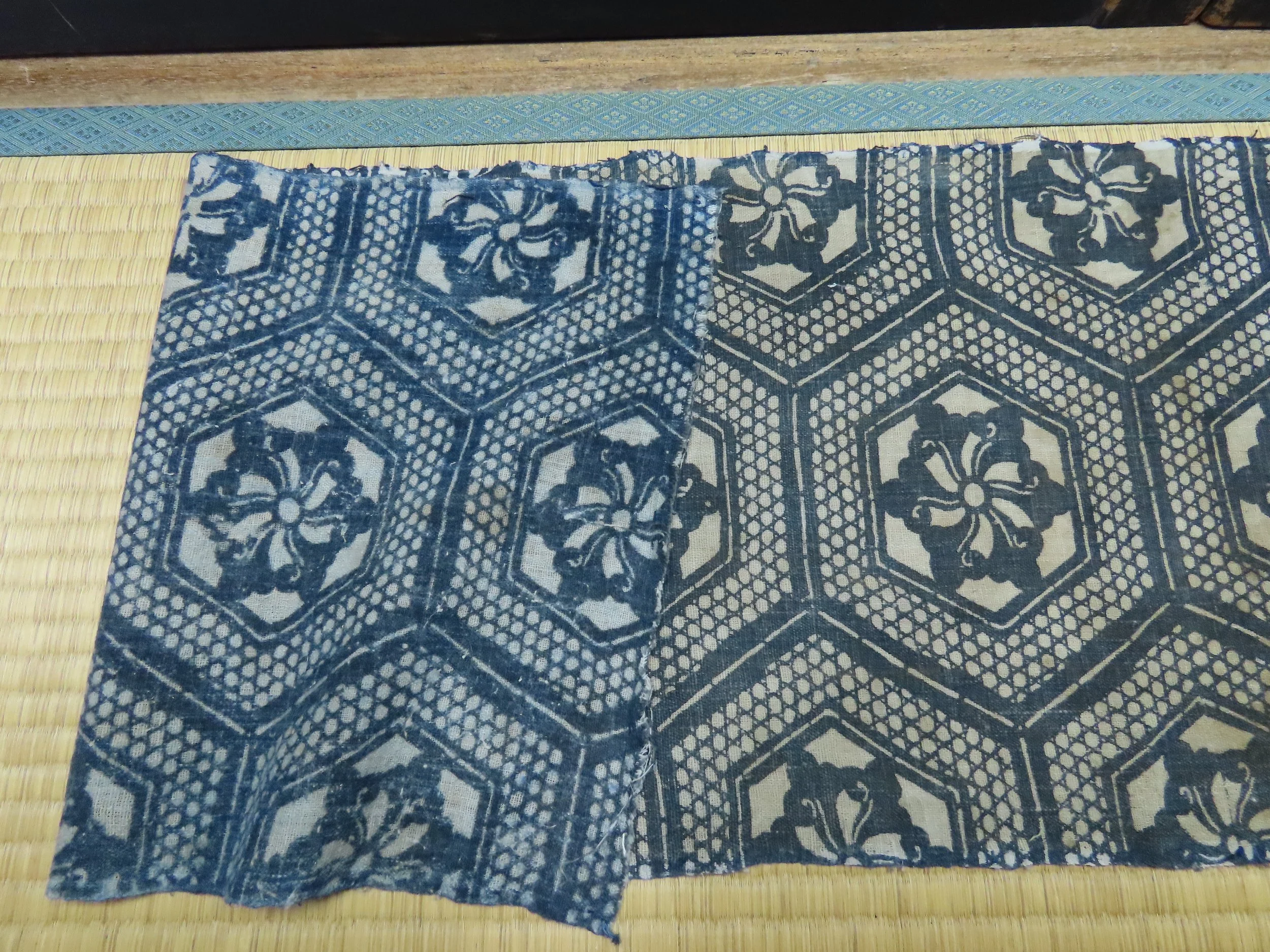
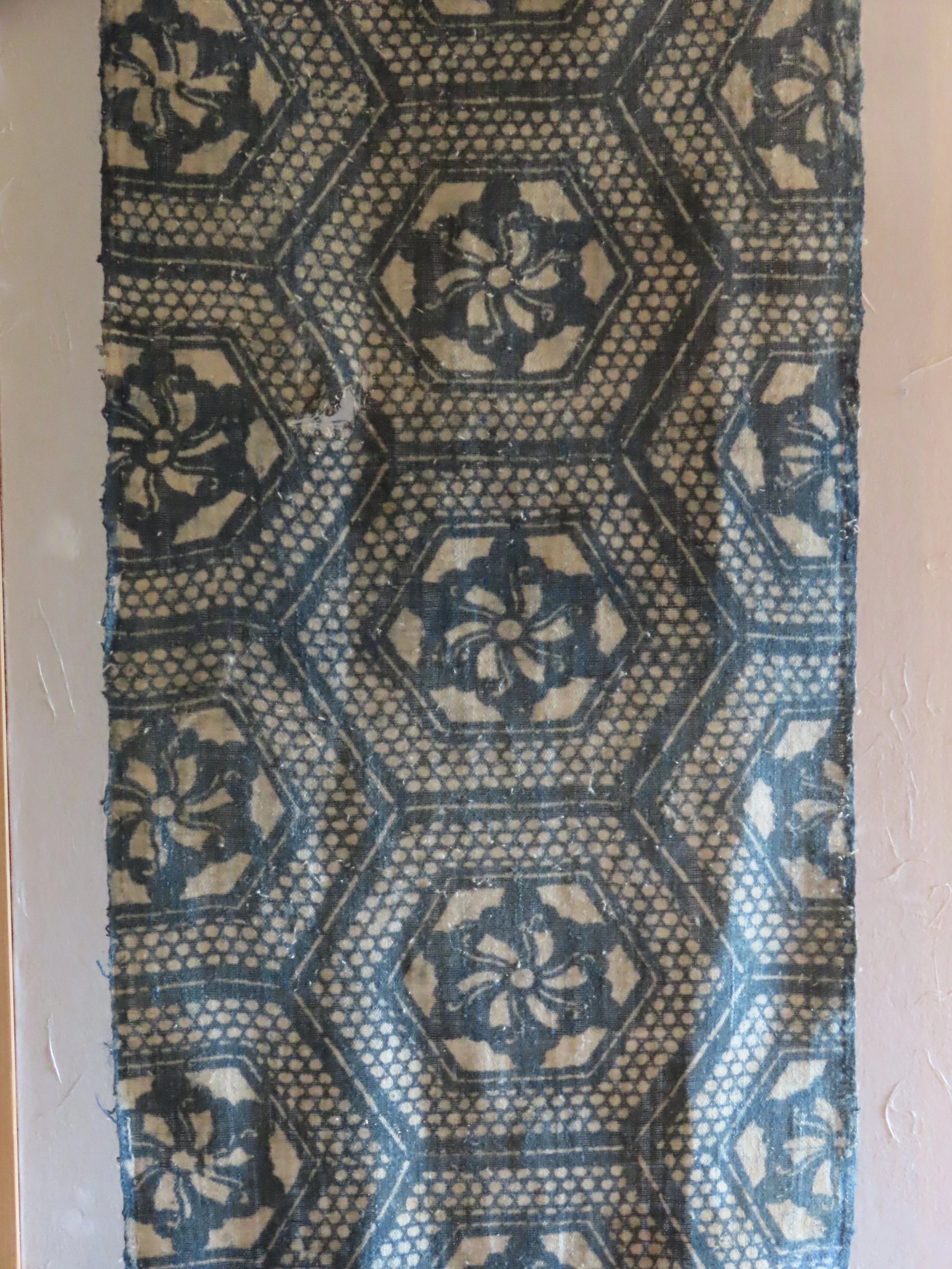
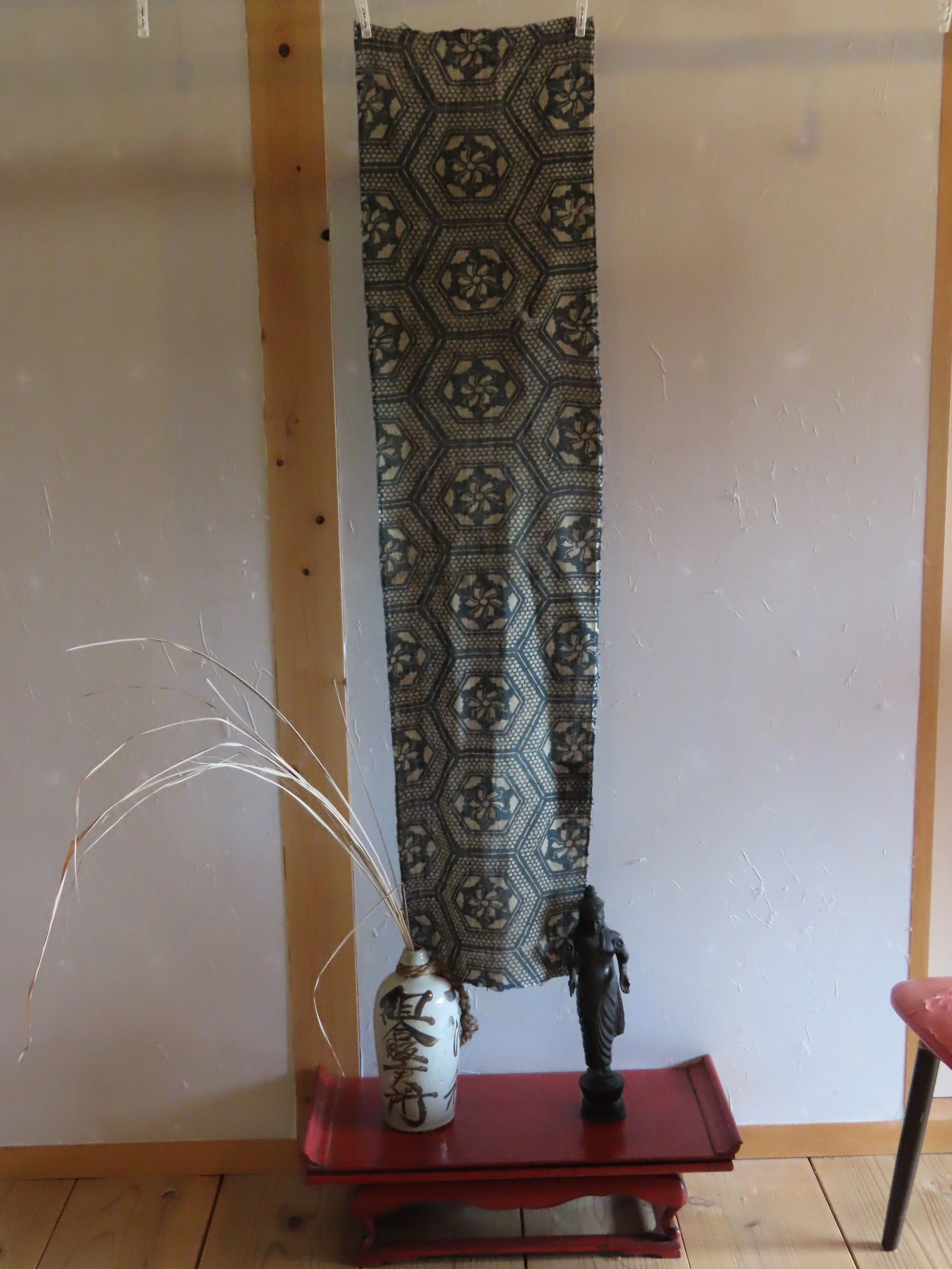
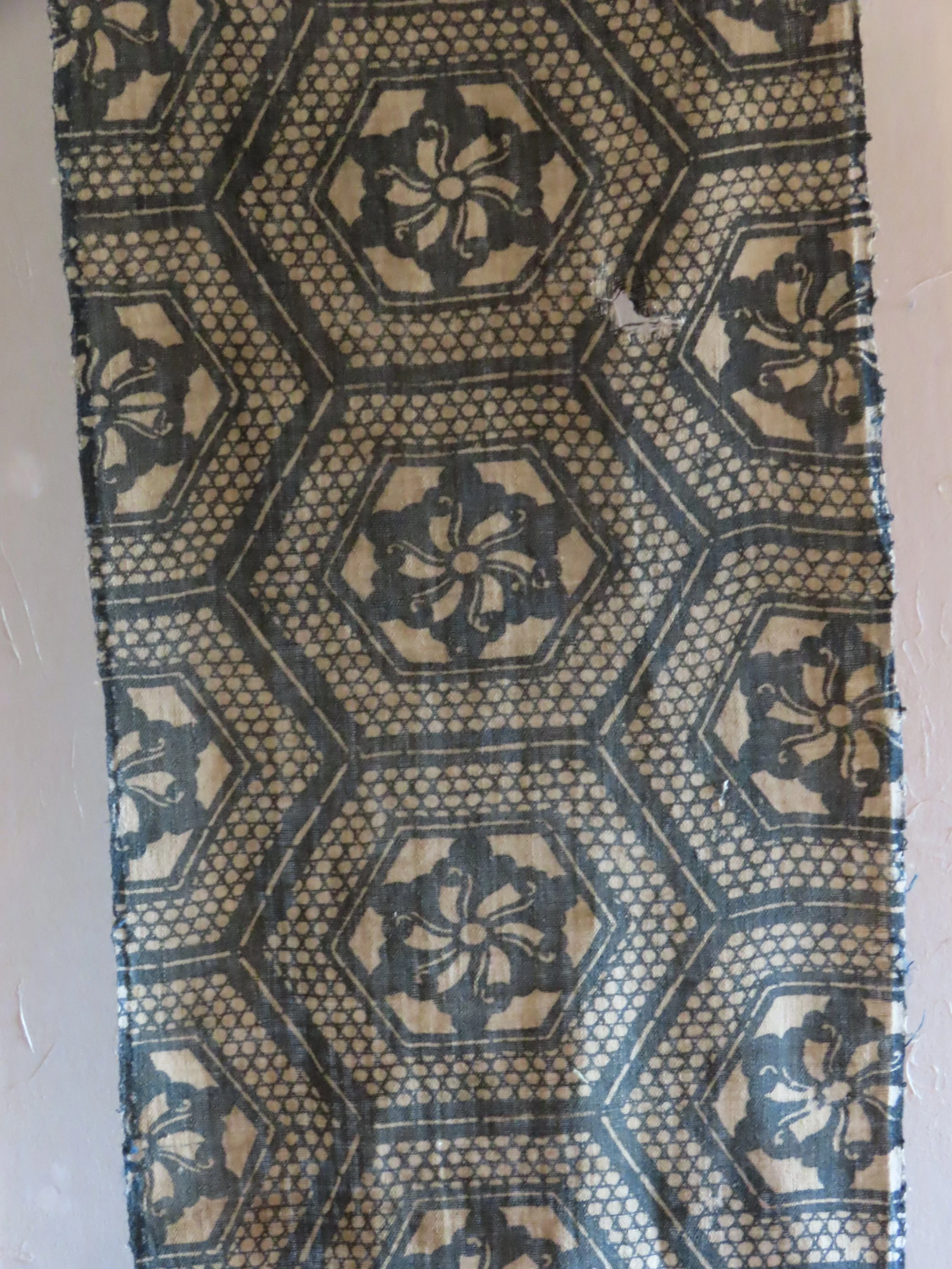
This is an indigo-dyed jishiro katazome cotton fabric panel from the Meiji era. Homespun, hand made fabric. Katazome is a stencil dyeing process. This is probably one panel from a futon cover made of 4-6 panels.
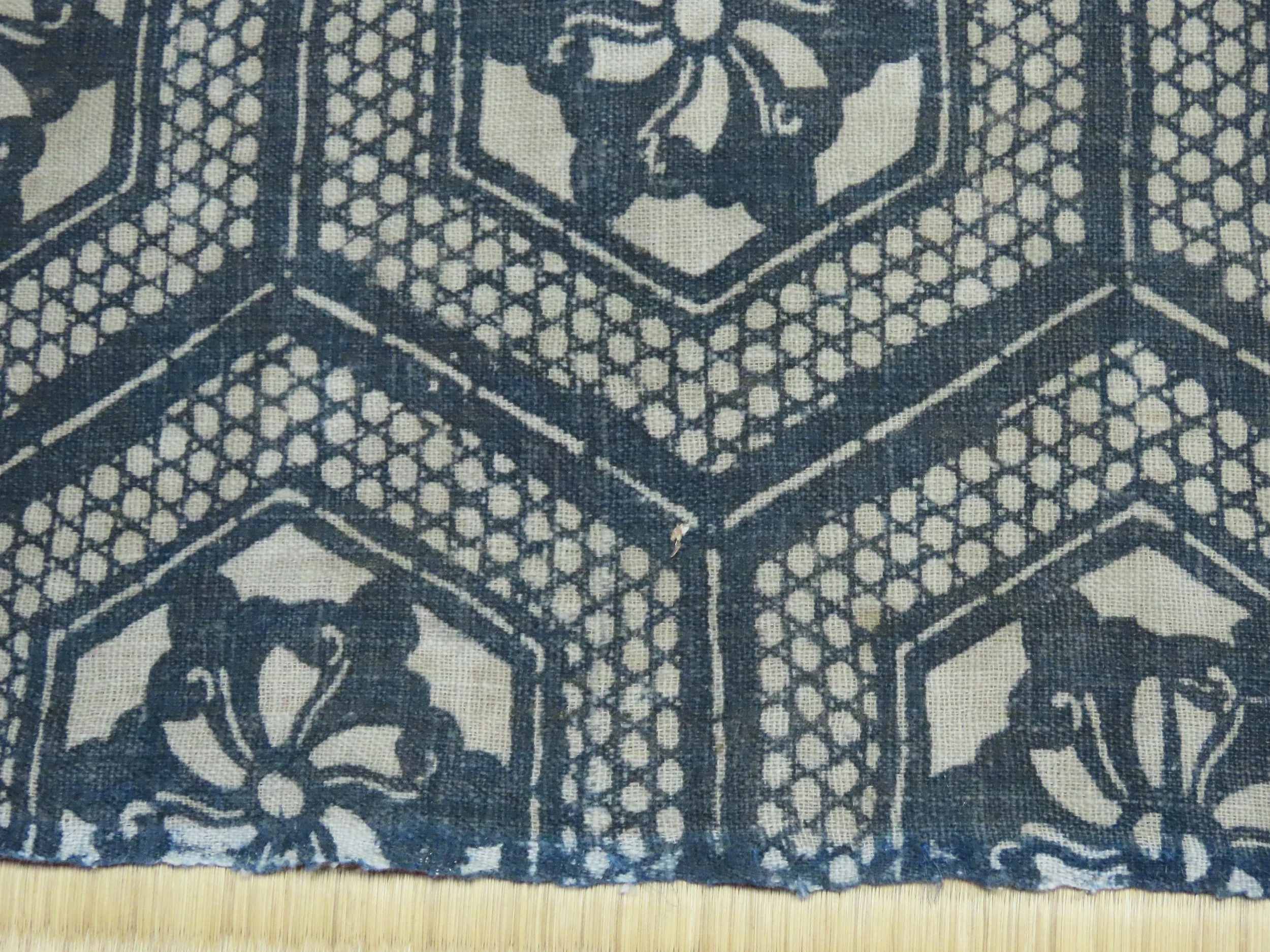
This is an old hand-woven, hand-dyed, japanese mingei textile treasure!! It is incredible, the time, energy and experience that went into creating this homespun work of art. It has a faded navy hue, from age, and the white of the base fabric is rather dulled with age, a gray hue. You can see a more accurate original color along the edges, fabric that was covered under seams, or on the back side. See the photos.
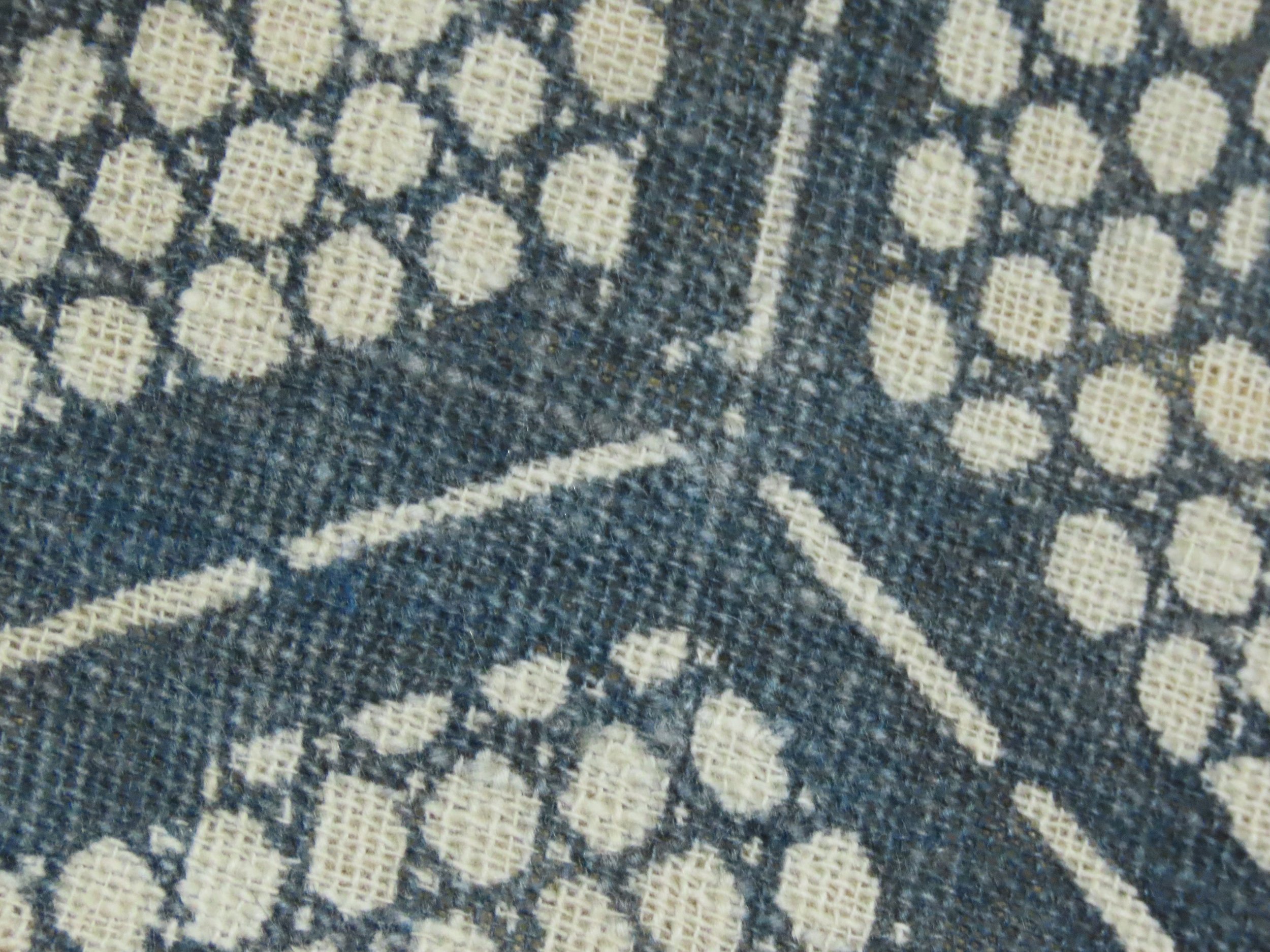
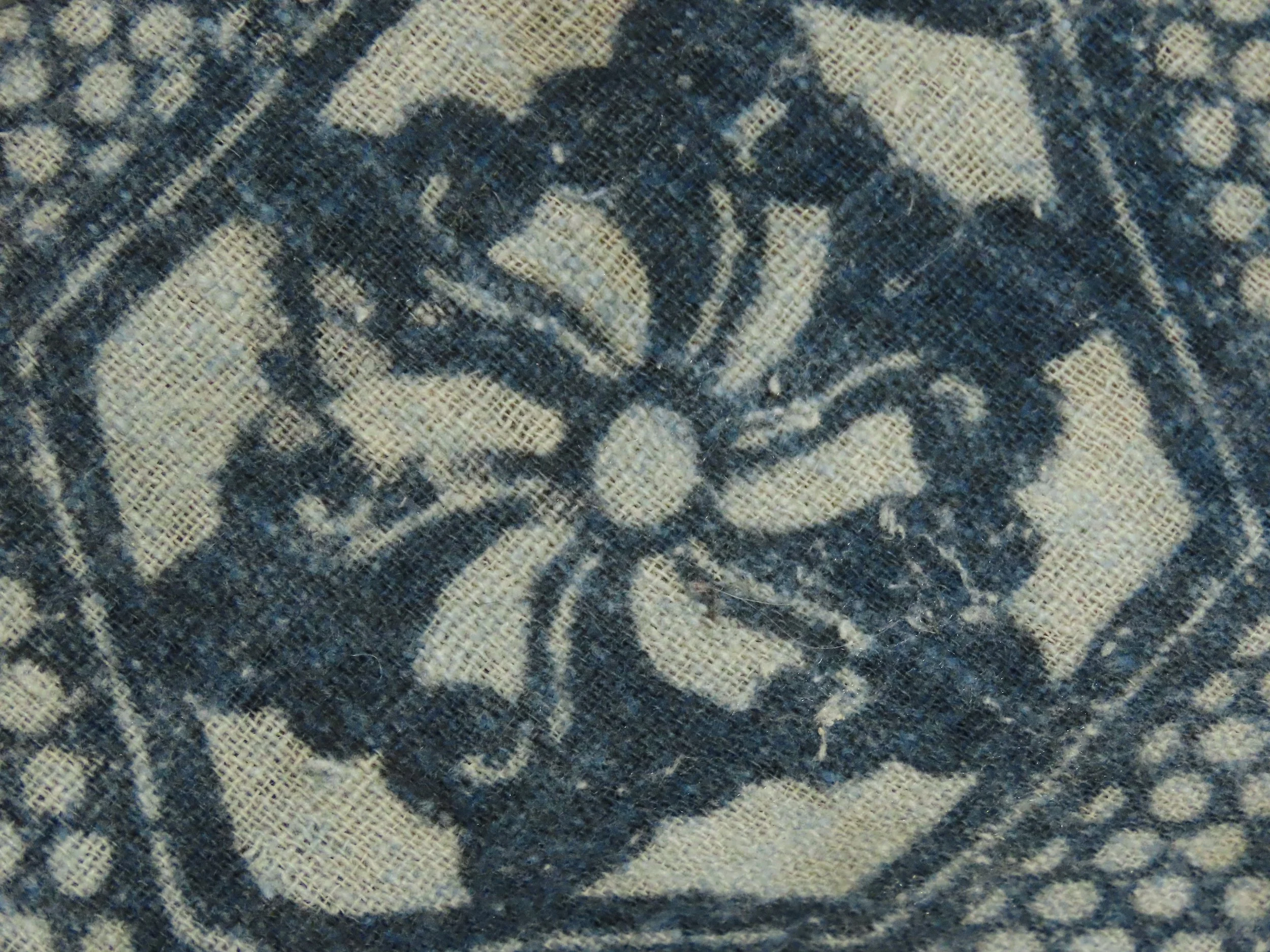
This is a relatively light weight cotton futon cover fabric. When i look closely at the fibers of the weave using a jewelers loop, I can see that they are relatively fuzzy and uneven, of varying widths. This is telltale of handspun fibers and homespun textiiles. The selvedges are very uneven. Lots of hand woven flavor.
Katazome is a stencil resist dye process. That means a stencil is used to apply a resist paste, which in this case is nori, a thick paste made from boiled rice. After the resist dries, it becomes basically impenetrable, and the fabric is dyed, most often with indigo. (The benefit of dyeing with indigo over other dyes is that it does not require heating up the liquid, which might start to melt away the resist paste, which becomes soft again with hot water.) The areas where the dried nori is applied 'resist' the indigo dye, which means they remain white and not dyed under that dry rice paste shell. That is the meaning of 'resist dyeing', where the rice paste resists the dye and that area remains white or undyed.
This type of katazome is also called ‘jishiro’, which means white ground. There are more paste resisted areas than usual, making it seem as if it is an indigo design placed on white ground. In addition to being jishiro, this textile also falls into the category of what are called ‘chuugata’ katazome, which literally means ‘medium gauge’. These katazome fabrics are somewhat older than the larger gauge, less detailed designs we see later. Granted, they don’t call the later fabrics larger gauge, like they call this type ‘chuugata’ (medium gauge).
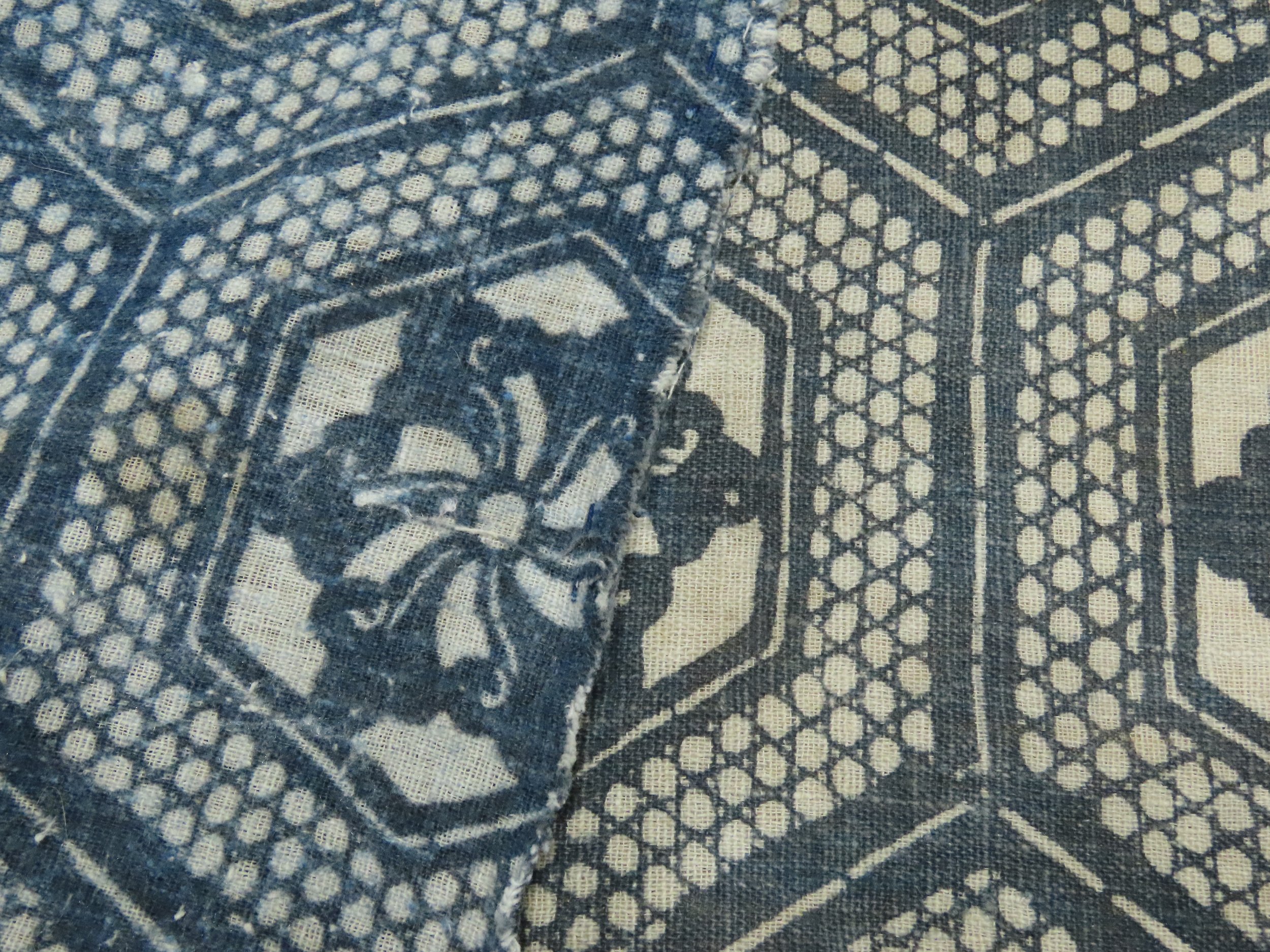
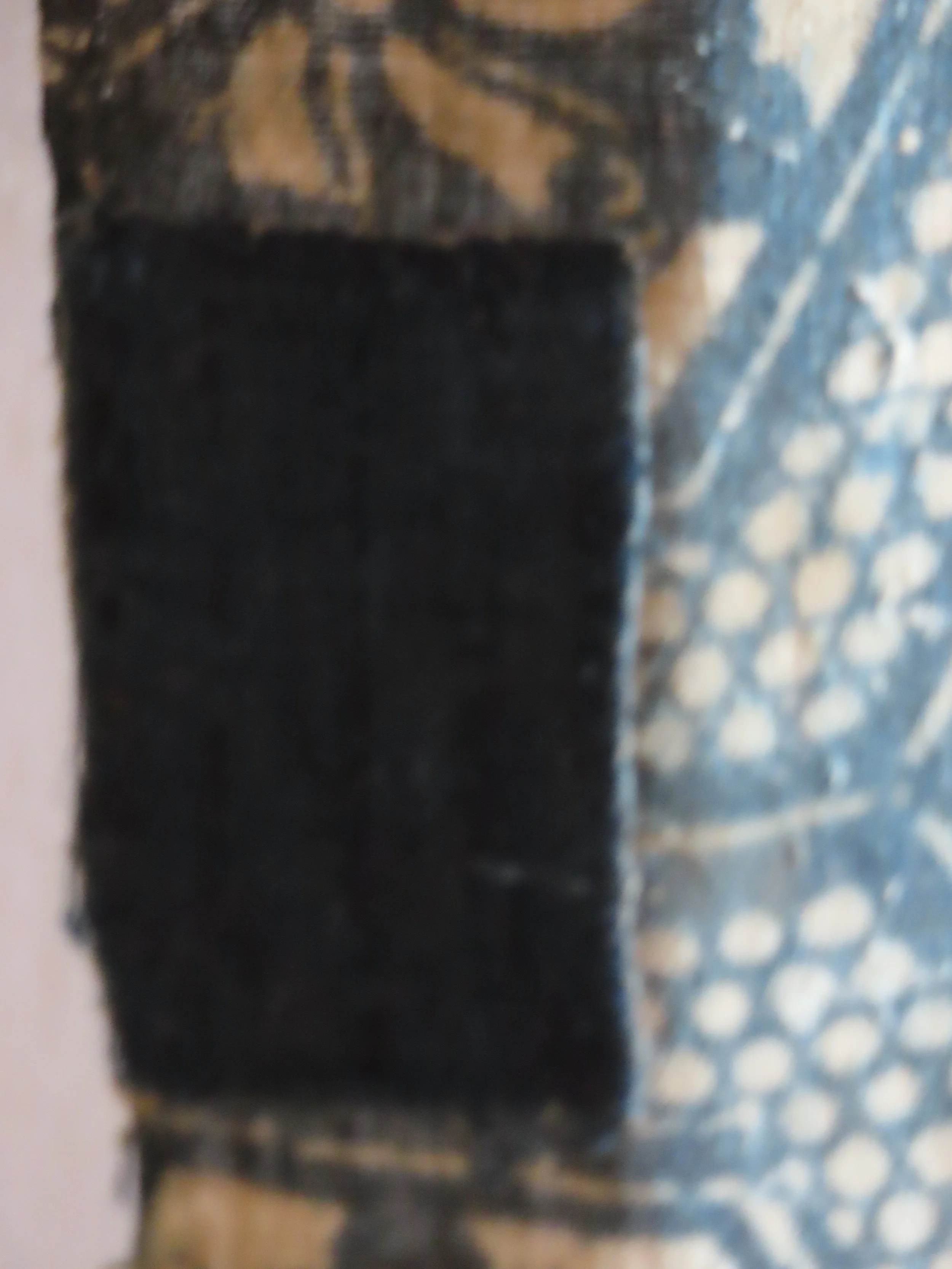
Some of the antique japanese katazome fabrics have been resist pasted on both sides, and some have just been pasted on just one side. This is a fabric that was pasted on both sides. The backside also shows the design, although there are sloppier areas where some stray rice paste must have made it’s way onto the fabric. We see whitish shadows in the pattern on the back side, like it was difficult to perfectly control applying the sticky nori and they spread some around inadvertently.
You can also see places on the textile where the stencil was matched up on both sides, but not perfectly. I like to see these small signs that show the handiwork done to create these pieces.
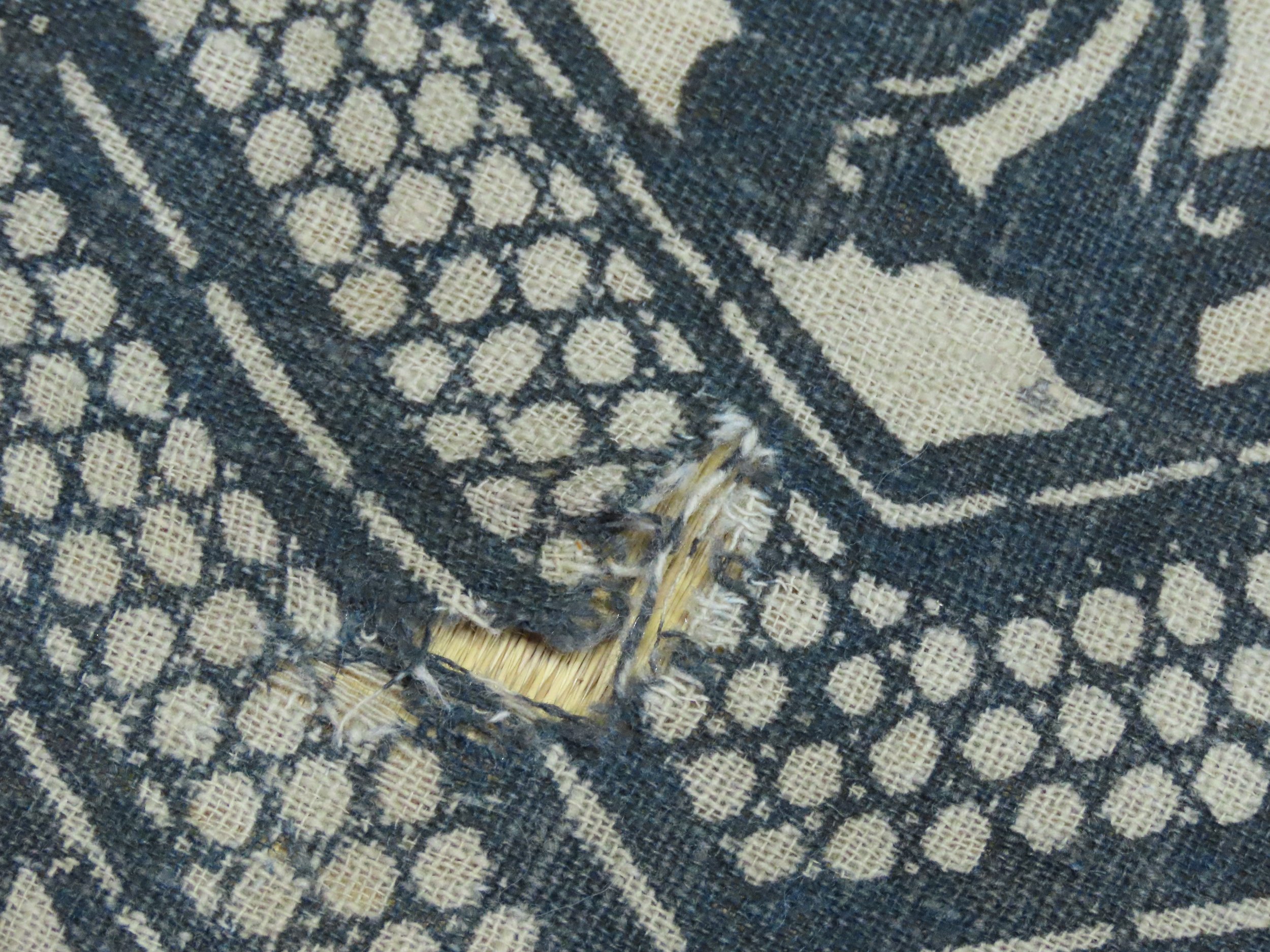
There is one solid indigo blue patch mending a hole on the backside of the panel. There is also one other spot that has a tear, a small L shaped tear. The first, third and eighth photos shows that well. Otherwise, the fabric is in great condition.
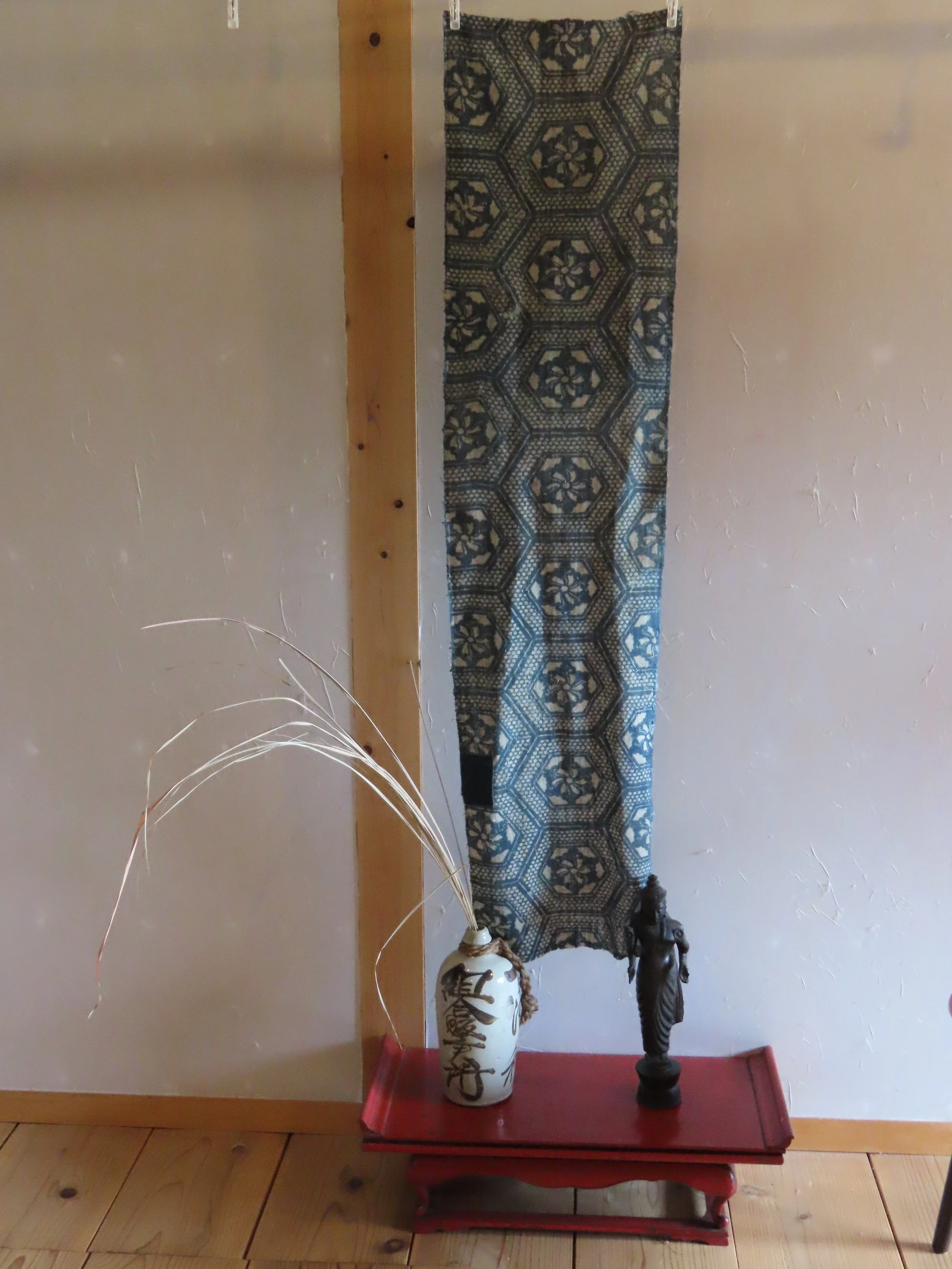
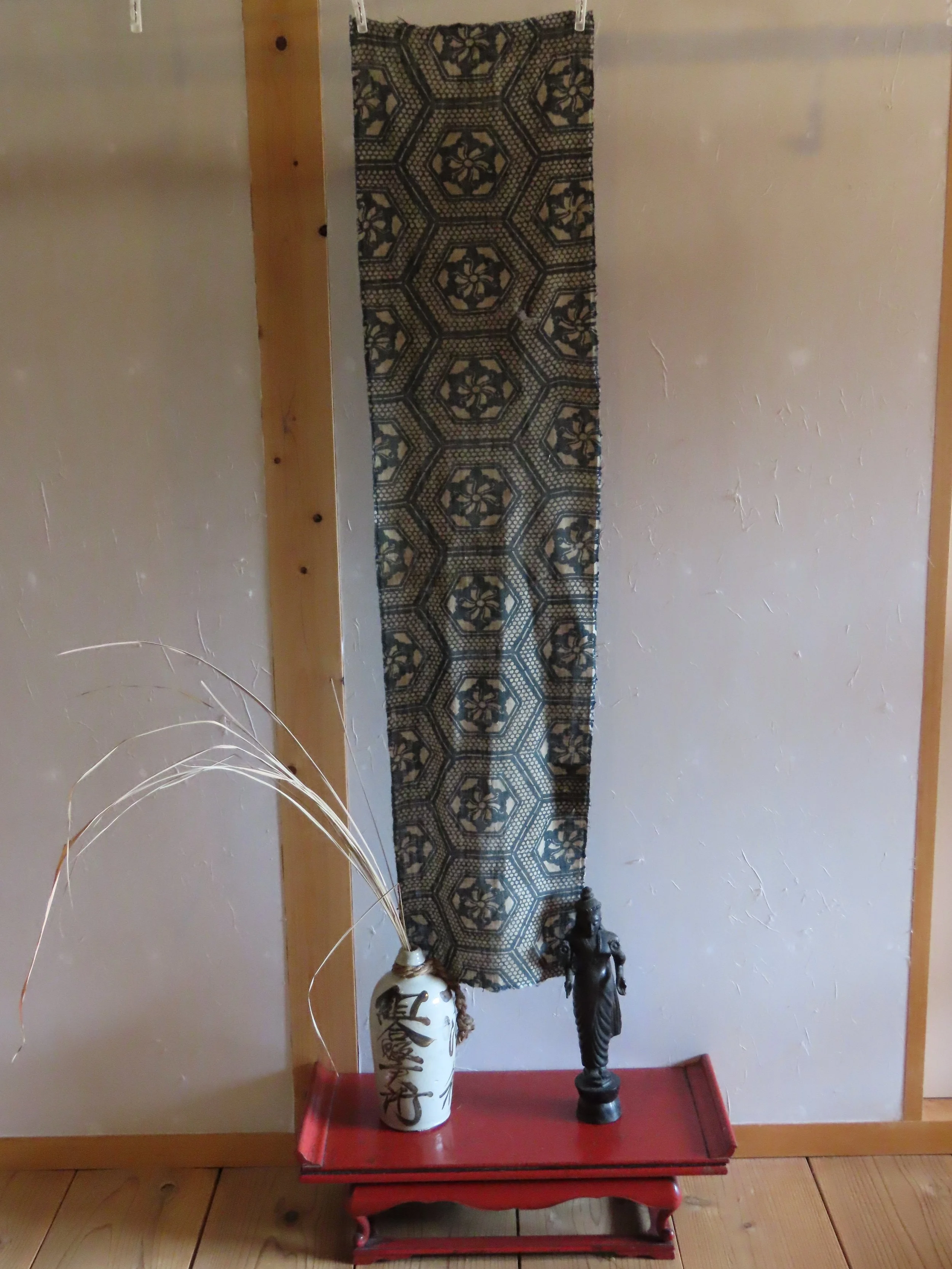
There are a ton of things you could do with this fabric. Display it!!! Hang it on a wall or across a table. Make a scarf! You could even use it unfinished, as is, depending on your fashion sense. I would. : ) Or you could add a few more patches, make it more boro looking with fabrics and stitches, sashiko and other embellishments.
You could also, of course, chop it into bits for use in smaller projects of all sorts. Collage, scrapbooking, little sewing projects galore!! Or it could be a part of your rainy day fabric stash. Or a gift for a friend?? and on.....I am sure you have even better ideas.
This has been washed and can be washed again, in hot water and detergent.
dimensions
132 cms long x 31.5 cms wide
52 inches x 12.5 inches
65 grams
Share this listing and my shop all over the place, Instagram, Facebook, Pinterest, the local corkboard, tell the cat.
meow.
This is an indigo-dyed jishiro katazome cotton fabric panel from the Meiji era. Homespun, hand made fabric. Katazome is a stencil dyeing process. This is probably one panel from a futon cover made of 4-6 panels.
This is an old hand-woven, hand-dyed, japanese mingei textile treasure!! It is incredible, the time, energy and experience that went into creating this homespun work of art. It has a faded navy hue, from age, and the white of the base fabric is rather dulled with age, a gray hue. You can see a more accurate original color along the edges, fabric that was covered under seams, or on the back side. See the photos.
This is a relatively light weight cotton futon cover fabric. When i look closely at the fibers of the weave using a jewelers loop, I can see that they are relatively fuzzy and uneven, of varying widths. This is telltale of handspun fibers and homespun textiiles. The selvedges are very uneven. Lots of hand woven flavor.
Katazome is a stencil resist dye process. That means a stencil is used to apply a resist paste, which in this case is nori, a thick paste made from boiled rice. After the resist dries, it becomes basically impenetrable, and the fabric is dyed, most often with indigo. (The benefit of dyeing with indigo over other dyes is that it does not require heating up the liquid, which might start to melt away the resist paste, which becomes soft again with hot water.) The areas where the dried nori is applied 'resist' the indigo dye, which means they remain white and not dyed under that dry rice paste shell. That is the meaning of 'resist dyeing', where the rice paste resists the dye and that area remains white or undyed.
This type of katazome is also called ‘jishiro’, which means white ground. There are more paste resisted areas than usual, making it seem as if it is an indigo design placed on white ground. In addition to being jishiro, this textile also falls into the category of what are called ‘chuugata’ katazome, which literally means ‘medium gauge’. These katazome fabrics are somewhat older than the larger gauge, less detailed designs we see later. Granted, they don’t call the later fabrics larger gauge, like they call this type ‘chuugata’ (medium gauge).
Some of the antique japanese katazome fabrics have been resist pasted on both sides, and some have just been pasted on just one side. This is a fabric that was pasted on both sides. The backside also shows the design, although there are sloppier areas where some stray rice paste must have made it’s way onto the fabric. We see whitish shadows in the pattern on the back side, like it was difficult to perfectly control applying the sticky nori and they spread some around inadvertently.
You can also see places on the textile where the stencil was matched up on both sides, but not perfectly. I like to see these small signs that show the handiwork done to create these pieces.
There is one solid indigo blue patch mending a hole on the backside of the panel. There is also one other spot that has a tear, a small L shaped tear. The first, third and eighth photos shows that well. Otherwise, the fabric is in great condition.
There are a ton of things you could do with this fabric. Display it!!! Hang it on a wall or across a table. Make a scarf! You could even use it unfinished, as is, depending on your fashion sense. I would. : ) Or you could add a few more patches, make it more boro looking with fabrics and stitches, sashiko and other embellishments.
You could also, of course, chop it into bits for use in smaller projects of all sorts. Collage, scrapbooking, little sewing projects galore!! Or it could be a part of your rainy day fabric stash. Or a gift for a friend?? and on.....I am sure you have even better ideas.
This has been washed and can be washed again, in hot water and detergent.
dimensions
132 cms long x 31.5 cms wide
52 inches x 12.5 inches
65 grams
Share this listing and my shop all over the place, Instagram, Facebook, Pinterest, the local corkboard, tell the cat.
meow.